Is there a scar on your face from an accident, a fall, surgery, a bite, or a burn that you notice in every photograph? Has it stayed red and raised long after it should have settled? Is it pulling, itching, or sitting in a dent you can feel with a fingertip? Facial scars are treatable, often considerably more than people expect, but the treatment depends entirely on what kind of scar it is. A raised keloid, a stretched line, and a tethered dent need three completely different approaches, and using the wrong one is how scars are made worse rather than better. At Reborn Skin and Hair Clinic, Bangalore, we treat facial scars for men, women, and children across the city. Patients come to us from Indiranagar, Koramangala, Whitefield, HSR Layout, Jayanagar, JP Nagar, Marathahalli, Malleshwaram, Electronic City, Bannerghatta Road, Hebbal, and Yelahanka. This page starts by helping you work out which type you have, because that decides everything, and it includes an honest section on keloids, which matter a great deal on Indian skin and are frequently mishandled.
We have treated several patients coming for this treatment from nearby localities like Aundh, Pashan, Hinjewadi, Ravet, Balewadi, Wakad, Pimple Saudagar, Pimple Nilakh, PCMC, Park Street, Sus and Mahalunge in Pune.
2ND FLOOR, TULIP TOWER, above TOYNATION, Madhavbaug Society, Balewadi Phata, Baner, Pune, Maharashtra 411069
We have provided treatment to a number of patients who came from Pune station and surrounding areas, including Wagholi, Kharadi, Wadgaon Sheri, Viman Nagar, Camp, Amanora Park, Magarpatta, Kalyani Nagar, Hadapsar, NIBM Road, Fatima Nagar, Salunkhe Vihar, Wanwadi and Mundhwa, in Pune.
1ST FLOOR, Gera legend, UNIT NO 107, N Main Rd, above KRISHNA MEDICARE, Ragvilas Society, Koregaon Park, Pune, Maharashtra 411001
We have treated various patients who came for this treatment from adjacent areas, such as Swargate, Deccan Gymkhana, Karve Nagar, Kothrud, Model Colony, Prabhat Road, Bhandarkar Road, Nanded City, Warje, and Katraj in Pune.
CTS No 33, Deccan Chamber, A2 2nd Floor, Nr Sahaydri Hospital, 20, Karve Rd, nr. Garware Metro station, above Mitsubishi cooling Planet, Deccan Gymkhana, Pune, Maharashtra 411004


Treatment |
Cost per session |
|---|---|
| Facial Scar Revision in Bangalore (starting) | Starts at ₹3,000 |
Prices mentioned are indicative and may vary based on individual condition and treatment plan. Final pricing confirmed after consultation. EMI available.
What Affects the Cost?
The starting figure above is for a laser or injection session. Surgical scar revision is quoted separately depending on complexity, with the full cost given to you in writing at your consultation.
Easy EMI Options Available – Zero-interest EMI plans available on select packages.
No Hidden Charges, Ever – All prices include consultation, sessions, and post-care guidance.
When considering the facial scar revision cost near me, we offer transparent, customized pricing with no hidden charges.
We’re bringing advanced skin, hair & aesthetic treatments closer to you.
Reborn Skin & Hair Clinic is arriving soon in Bangalore.
Stay tuned for our grand opening and experience expert care with personalized treatments.
Opening Soon • Bangalore
Run a fingertip over it, look at it in good light, and compare its edges with the original wound. Most facial scars fall into one of these.
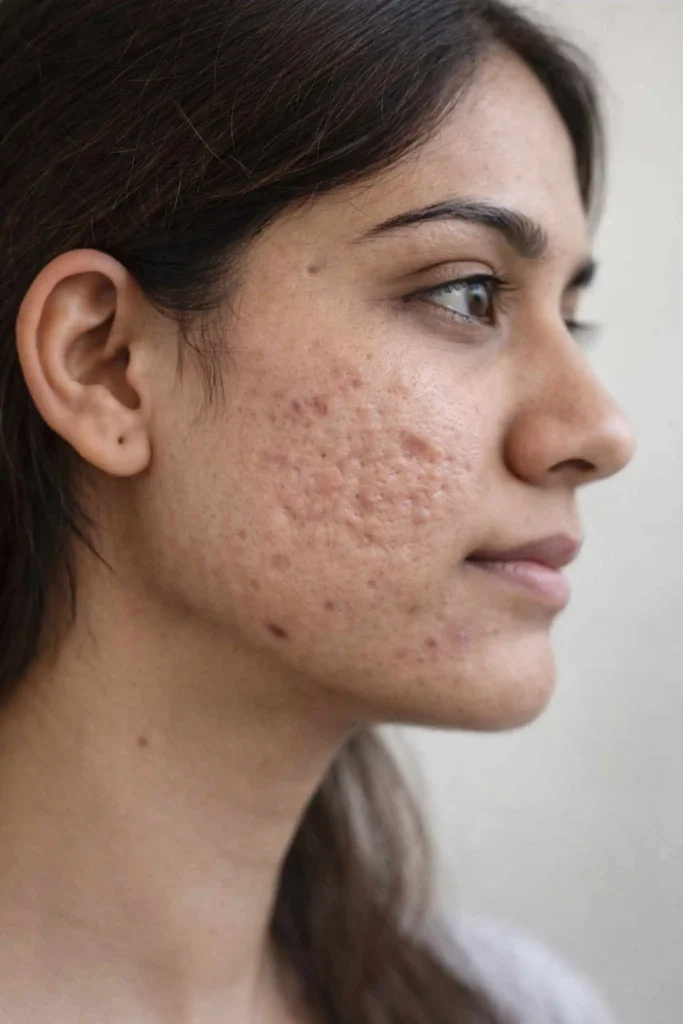
Depressed, or atrophic. Sits below the level of the surrounding skin, so your fingertip drops into it. Often tethered underneath, which makes it look deeper when you smile or stretch the skin. Treated by releasing the tether, filling, and resurfacing.
Raised but within the original boundary, or hypertrophic. Thickened, firm, often red, but it has not spread beyond where the wound was. These frequently improve substantially on their own over 12 to 18 months, and respond well to silicone, injections, and vascular laser.
Raised and spreading beyond the original wound, or keloid. Grows outward into skin that was never injured, may itch or feel tender, and does not settle on its own. This needs a completely different plan, covered in its own section below.
Tight and restricting, or contracted. A band of scar that pulls, most commonly after a burn, which can drag an eyelid, lip, or nostril out of position. This needs surgical release rather than resurfacing, and where function is affected it should not be left to settle.
Wide and stretched. Flat and level with the skin, but noticeably wider than a fine line should be. Treated by excising the widened scar and closing it carefully so the replacement is thinner.
Badly angled or stepped. A scar crossing the face at the wrong angle relative to natural creases, or with edges at different levels. These catch the eye disproportionately, and repositioning them along a natural line often improves them more than any resurfacing.
Discoloured only. Flat and smooth, with only the colour changed. Red means the scar is still immature and settling. Brown means post-inflammatory pigmentation, which is very common on Indian skin. Both are treated differently from a textural scar.
Most people have a combination, such as a pigmented mark sitting over a shallow dent, and the plan addresses each component in turn.

This is the advice people least want and most benefit from.
Scars keep changing for a long time. A new scar is red, firm, and often raised, and it continues remodelling for 12 to 18 months. What looks alarming at three months is frequently far less noticeable at a year without anything being done to it.
Operating on an immature scar can produce a worse one. Revising a scar that is still red and active often results in a replacement that heals just as thickly. For elective revision, we generally wait until the scar has matured, commonly 6 to 12 months.
Some things should not wait. A contracture pulling an eyelid, lip, or nostril out of position needs earlier attention, as does a scar restricting movement or affecting a child’s growth. Function comes before appearance.
Non-surgical treatment can start early. Silicone, sun protection, and injections for a scar that is thickening are begun early and deliberately, precisely to reduce the chance that revision is needed at all.
What this means for you. If your scar is recent, a consultation is still worthwhile. We will usually start you on the measures that improve how it matures, then reassess at a point when revision can be judged properly.
The honest framing, before you book anything.
A scar cannot be removed. Skin that has been injured through its full thickness heals with scar tissue, and that does not reverse. Anyone offering complete removal of a facial scar is overpromising, and that is worth knowing before you spend money.
What revision actually does. It trades a poor scar for a better one. Better means finer, flatter, closer in colour to your skin, and crucially, better positioned. A scar that runs along a natural crease or at the border between two areas of the face is dramatically less noticeable than the same scar running across them, even when it is the same length.
What a good result looks like. A line most people do not notice unless you point it out, rather than nothing at all.
How much improvement to expect. It varies with scar type, location, your skin, and how you heal. We will tell you honestly what we expect in your case, including when we think the improvement would be modest enough that leaving it alone is reasonable.
The result takes time. A revised scar goes through its own maturing process, looking red and firm before settling over 12 to 18 months. You judge it at a year, not at a month.
A doctor examines the scar under good light and magnification, runs a finger over it to assess level, stretches the skin to identify tethering, compares its edges against the original wound, and assesses its angle relative to your natural creases. How old it is, how it was caused, how it has changed, and any itching, tightness, or restriction are recorded, along with your skin type and any keloid history in you or your family. Photographs are taken at set angles. You then receive a staged plan with realistic expectations and a written cost.
A patch test is done where laser is planned. Skin is usually prepared with a topical regimen for a few weeks beforehand to reduce the chance of pigmentation. Antiviral cover is prescribed where there is a cold sore history. For surgical revision, blood tests are arranged where indicated, blood thinners reviewed, and you will be asked to stop smoking, which affects how a revised scar heals.
Injections and laser are given after numbing cream, over 15 to 30 minutes. Subcision and punch procedures are done under local anaesthetic. Surgical revision is performed under local anaesthetic, with the scar excised and closed in layers using fine sutures, typically over 30 to 90 minutes depending on length and complexity.
15 to 30 minutes for injections and laser, 30 to 90 minutes for surgical revision.
None. It is an outpatient treatment and you go home the same day.
Injections soften a raised scar across a course over months. Laser and resurfacing build over 3 to 6 months. A revised scar looks red and firm initially and is judged fairly at 12 months.
This matters more in India than in most places, because keloid tendency is considerably more common in brown and darker skin.
What makes a keloid different. It grows beyond the boundary of the original injury into skin that was never damaged. It does not settle on its own the way a hypertrophic scar does. It often itches or feels tender, and it can continue enlarging for years.
Where they appear on the face and head. Most commonly the earlobe after piercing, which is extremely common here, along with the jawline and along the hairline. Acne on the jaw and chest can also produce keloids.
The critical point. Cutting out a keloid on its own, with nothing else, has a high rate of return, and the returning keloid is frequently larger than the original. A surgeon who offers simply to excise your keloid without describing what else will be done alongside it is proposing something likely to make things worse.
What a proper keloid plan includes. Injections into the scar, commonly a steroid, often combined with other agents, given across several sessions. Silicone gel or sheeting, and pressure where the site allows it, such as a pressure earring after earlobe treatment. Cryotherapy in selected cases. Where excision is appropriate, it is planned with treatment continuing afterwards to reduce recurrence, and some higher-risk keloids need specialist adjuvant treatment which we will discuss and arrange if indicated.
It is managed rather than finished. Keloid treatment is a course with follow-up, and sometimes a long-term relationship, rather than a single procedure. We will tell you that at the start.
If you are keloid-prone, say so before any procedure. Not just scar treatment, but any surgery, piercing, or cosmetic procedure anywhere on your body. It changes what we do and how we close.
For flat, discoloured scars
For raised scars
For depressed and tethered scars
For widened, angled, or stepped scars
For contractures
Combination is normal. Most facial scars need more than one approach, staged over months.
Critical Safety Note :Declare any history of keloid or thickened scarring in you or your family, including from ear piercing, acne, vaccination sites, or previous surgery anywhere on the body. Declare cold sores, eczema, psoriasis, and vitiligo. Declare current or recent isotretinoin use, since it changes the timing of resurfacing and surgery. Declare diabetes, any immune condition, bleeding disorder, or blood-thinning medication. Tell us how the scar was caused, particularly if it followed a burn, a bite, or surgery, and whether any foreign material may still be within it.
Two things matter here and both are practical.
Pigmentation risk. Darker skin produces pigment readily in response to injury, so aggressive resurfacing can leave marks darker than the scar being treated. We use conservative settings, patch test where indicated, prepare the skin with a topical regimen beforehand, and often prefer radiofrequency microneedling over fully ablative resurfacing.
Keloid tendency. Higher in brown skin, which changes how we close a surgical revision, what we prescribe afterwards, and whether revision is advisable at all in a given case.
Sun protection is part of the treatment, not aftercare. Scars darken with ultraviolet exposure and hold that darkening stubbornly. Bangalore has strong UV year-round, including through cloud and car windows, and two-wheeler commutes expose the face directly. Broad-spectrum sunscreen over the scar every morning, for at least a year, does more for the final appearance than most people expect.
Searching for a dermatologist near you in Bangalore? Our team of qualified skin doctors, dermatologists and hair specialists personalizes every treatment based on your skin type and concern. Consult our dermatologist in Bangalore and skin specialists at our nearest skin and hair clinic
MBBS, DVD
Dermatologist & Venerologist
MDS(Maxillofacial surgeon)
Aesthetic Physician
MDS, Maxillofacial &
Hair Transplant Surgeon
MBBS, DDV, FAM
Dermatologist
Searching for a dermatologist near you in Mumbai? Our team of qualified skin doctors, dermatologists and hair specialists personalizes every treatment based on your skin type and concern. Consult our dermatologist in Mumbai and skin specialists at our nearest skin and hair clinic
MBBS, DVD
Dermatologist & Venerologist
MDS(Maxillofacial surgeon)
Aesthetic Physician
MDS, Maxillofacial &
Hair Transplant Surgeon
MBBS, DDV, FAM
Dermatologist
No. Skin injured through its full thickness heals with scar tissue, and that does not go away. What scar revision does is trade a poor scar for a better one: finer, flatter, closer to your skin colour, and better positioned. A well-revised facial scar is one most people do not notice unless you point it out.
Run a fingertip over it. A dent your finger drops into is depressed. Raised and firm but staying within the original wound edges is hypertrophic. Raised and spreading beyond the original wound into undamaged skin is a keloid. Tight and restricting movement is a contracture. Flat with only the colour changed is discolouration. A doctor confirms this under magnification.
No. The liver is the organ that performs detoxification and does not need cle
Scars remodel for 12 to 18 months, and many look far better at a year without anything being done. For elective revision we generally wait until the scar has matured, commonly 6 to 12 months, because operating on an active scar often produces an equally thick replacement. Contractures affecting an eyelid, lip, or nostril are the exception and need earlier attention.
ansing to do so. If you are concerned about your liver, ask for liver function tests and a scan, since fatty liver disease is common and often silent. That is a far better use of the money than an infusion, and it produces a diagnosis rather than a sensation.
Because excision alone has a high rate of return, and the keloid that comes back is frequently larger than the original. A proper keloid plan combines injections into the scar, silicone, pressure where the site allows, and where excision is appropriate, continued treatment afterwards. Anyone offering simply to cut out your keloid without describing what else will be done is proposing something likely to backfire.
Yes, keloid tendency is considerably more common in brown and darker skin. On the face and head they appear most often on the earlobe after piercing, along the jawline, and near the hairline. If you or your family are keloid-prone, say so before any procedure anywhere on your body, including piercings and cosmetic treatments, because it changes how we treat and close.
It depends on the scar. Vascular laser helps scars that remain red by targeting the vessels. Fractional resurfacing and radiofrequency microneedling improve texture and depressed scars by rebuilding collagen. Laser does not flatten a keloid on its own, does not release a contracture, and does not correct a badly angled or stepped scar, all of which need other approaches.
Because a scar lying along a natural crease or at the border between two areas of the face is dramatically less noticeable than the same scar crossing them, even at the same length. Much of what surgical revision achieves is repositioning, including breaking a straight line into smaller segments that the eye reads far less readily than one continuous line.
After surgical revision, yes, temporarily. The new scar looks red and firm for weeks to months before softening and fading, which is normal maturing rather than a failed result. Judge it at around 12 months against your baseline photographs. After injections and laser, expect a few days of redness and swelling.
A considerable one. Scars darken readily with ultraviolet exposure and hold that darkening stubbornly, particularly on brown skin. Bangalore has strong UV year-round, including through cloud and car windows, and two-wheeler commutes expose the face directly. Daily broad-spectrum sunscreen over the scar for at least a year does more for the final appearance than most people expect.
Book a free consultation at Reborn Skin and Hair Clinic, Bangalore. A doctor will examine the scar under magnification, identify its type, check for tethering and keloid tendency, assess its angle against your natural creases, and set out a staged plan with realistic expectations and a written cost. If waiting would serve you better, we will say so. We see patients from across Bangalore.
Improve the appearance of facial scars and restore a smoother-looking complexion with personalized Facial Scar Revision Treatment in Bangalore. Book your free consultation today.
Advanced Skin, hair & Asthetic Treatments Now Closer to You!
Trusted in Pune, Mumbai, Hyderabad, Goa & Jaipur.
Coming Soon to BANGALORE.
Stay Tuned for Our Grand Launch!
EXPERT CARE AWAITS
We’re getting ready to welcome you.
Advanced Skin, hair & Asthetic Treatments Now Closer to You!
Stay Tuned for Our Grand Launch!
EXPERT CARE AWAITS
We’re getting ready to welcome you.