Acne vs Pimples: What’s the Difference and How to Treat Them?
“Doctor, do I have acne or just a few pimples?”
This is one of the most common questions people ask. Many use the words acne and pimples interchangeably, assuming they are the same thing.
This confusion often leads to frustration, some think a single pimple means they have acne, while others think regular breakouts are “just pimples. This mix-up often leaves people confused about what’s really happening with their skin.
Here’s the truth: acne is a broader skin condition, while pimples are one of its symptoms. In other words, every pimple is related to acne, but not every acne condition looks like a simple pimple.
Sounds simple? Maybe. But the complete picture involves causes, types, prevention, and treatments that go much deeper than this quick explanation.
So, if you’ve ever wondered “What is the difference between acne and pimples?”, “Why do I keep getting breakouts?”, or “How can I prevent and treat them effectively?”
You’re in the right place.
In this blog, we’ll clear up the confusion, debunk common myths, and guide you through both professional acne treatment options and effective pimple treatment methods you can try at home — all to help you achieve clear, healthy skin.
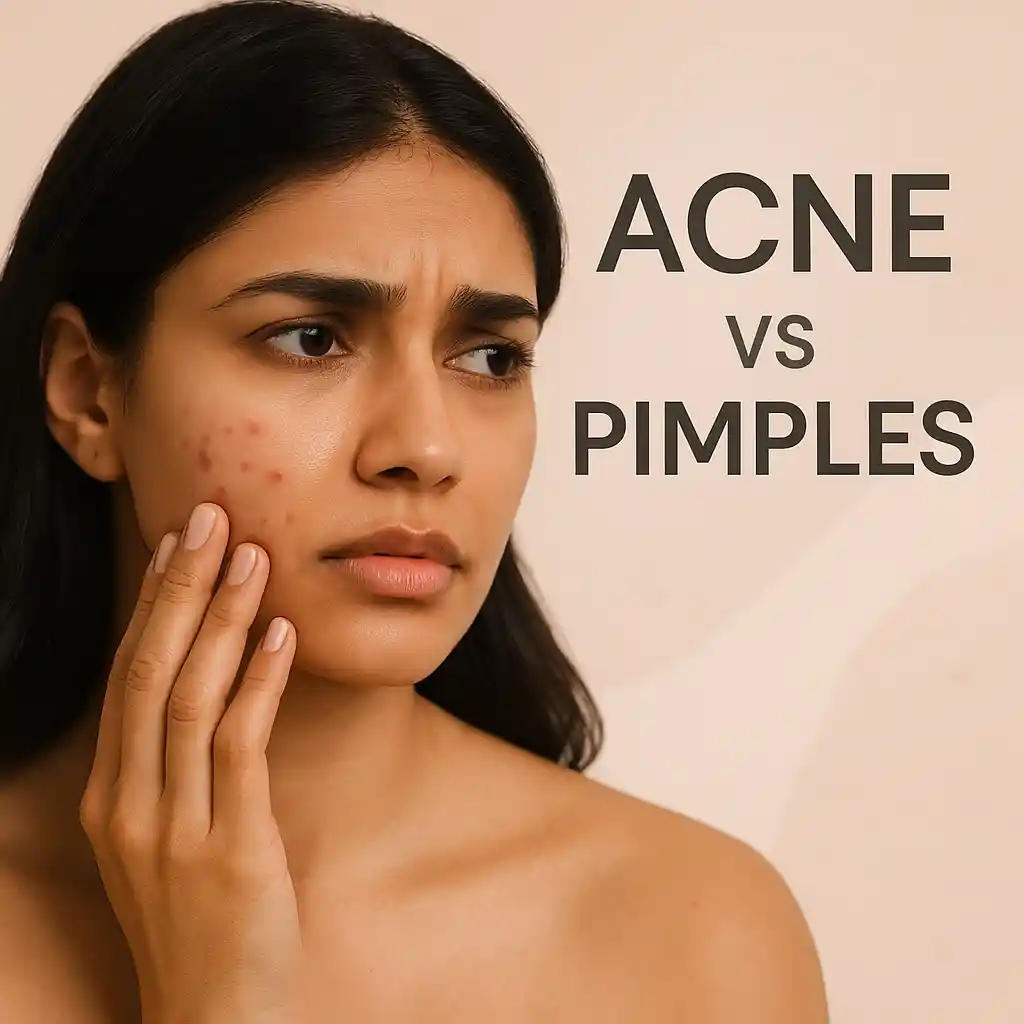
Acne vs Pimples: The Key Difference
What is Acne?
Acne is a chronic skin condition that develops when hair follicles get clogged with oil, dead skin cells, and bacteria. It can cause a variety of breakouts such as blackheads, whiteheads, pustules, nodules, and cysts.
Acne often affects the face, chest, back, and shoulders. If breakouts are not managed properly, they can become more severe and may leave marks behind, which can be addressed through acne scar treatment.
What are Pimples?
Pimples are individual spots or bumps that appear on the skin as part of acne. They are usually red, inflamed, and sometimes filled with pus. Pimples can occur occasionally or frequently, but they are just one symptom of the broader condition of acne.
What is the Difference Between Acne and Pimples
In short, pimples are individual spots, while acne is a broader skin condition that can include multiple types of breakouts over time.
Understanding this helps in choosing the right treatment and prevention methods.
| Aspect | Acne | Pimples |
|---|---|---|
|
Nature |
Long-term conditions that may include blackheads, whiteheads, papules, pustules, nodules, and cysts.
|
One form of breakout that can occur during acne. |
|
Cause |
Combination of hormonal changes, excess sebum, bacteria, and lifestyle factors. |
Usually formed when a pore gets blocked with oil, dirt, or bacteria. |
|
Appearance |
Can show multiple types of lesions across the face, chest, back, or shoulders. |
Appears as red, swollen, or pus-filled bumps, usually in smaller numbers. |
|
Severity |
Ranges from mild to severe and may need long-term treatment. |
Usually temporary, can be treated with simple skincare or spot treatments. |
|
Example |
A person with frequent breakouts in different forms (whiteheads, cysts, pustules). |
A single red bump that appears before an exam or stressful event. |
What Causes Acne & Pimples?
Acne and pimples can be frustrating, especially when they keep coming back. Understanding what causes acne and pimples is the first step to managing and preventing them effectively. Acne and pimples develop due to a combination of internal and external factors.
General Causes of Acne
Acne develops when hair follicles get clogged with excess oil (sebum), dead skin cells, and bacteria. Inflammation occurs in these clogged pores, leading to breakouts. The main contributors include:
- Overproduction of oil by the skin
- Accumulation of dead skin cells
- Bacterial growth inside pores
- Inflammation caused by the immune system
How Acne Forms: Step by Step
The acne formation process can be understood in a few stages:
- Excess oil production: Skin glands produce more sebum than needed.
- Clogged pores: Dead skin cells mix with the excess oil, forming a plug.
- Bacterial growth: Acne-causing bacteria multiply inside the clogged pores.
- Inflammation: The body reacts to bacteria, causing redness, swelling, and pimples.
Body Acne Causes
Acne isn’t limited to the face; it can appear on the chest, back, shoulders, and other areas. Body acne causes include:
- Sweat and friction from tight clothing
- Poor hygiene or not cleansing after exercise
- Hormonal fluctuations that affect the entire body
Lifestyle & Health Factors: Why Do We Get Pimples?
Even if you don’t have chronic acne, pimples can appear due to lifestyle and health factors:
- High stress levels
- Lack of sleep or irregular sleep cycles
- Unhealthy diet or excess sugar
- Skincare products that clog pores
Does Hormonal Imbalance Cause Acne
Yes. Hormonal imbalance is a major factor in acne. It commonly affects teenagers during puberty, women with PCOS (Polycystic Ovary Syndrome), pregnant women, and those experiencing menstrual cycle changes.
Chronic stress can also disrupt hormone levels. These hormonal fluctuations can increase oil production in the skin, which may clog pores and lead to breakouts.
Can Dry Skin Cause Acne?
Many people assume only oily skin gets acne, but dry skin can also cause pimples. When the skin is dry, it can overcompensate by producing more oil, which clogs pores. Irritation from dry skin can also contribute to inflammation and pimples.
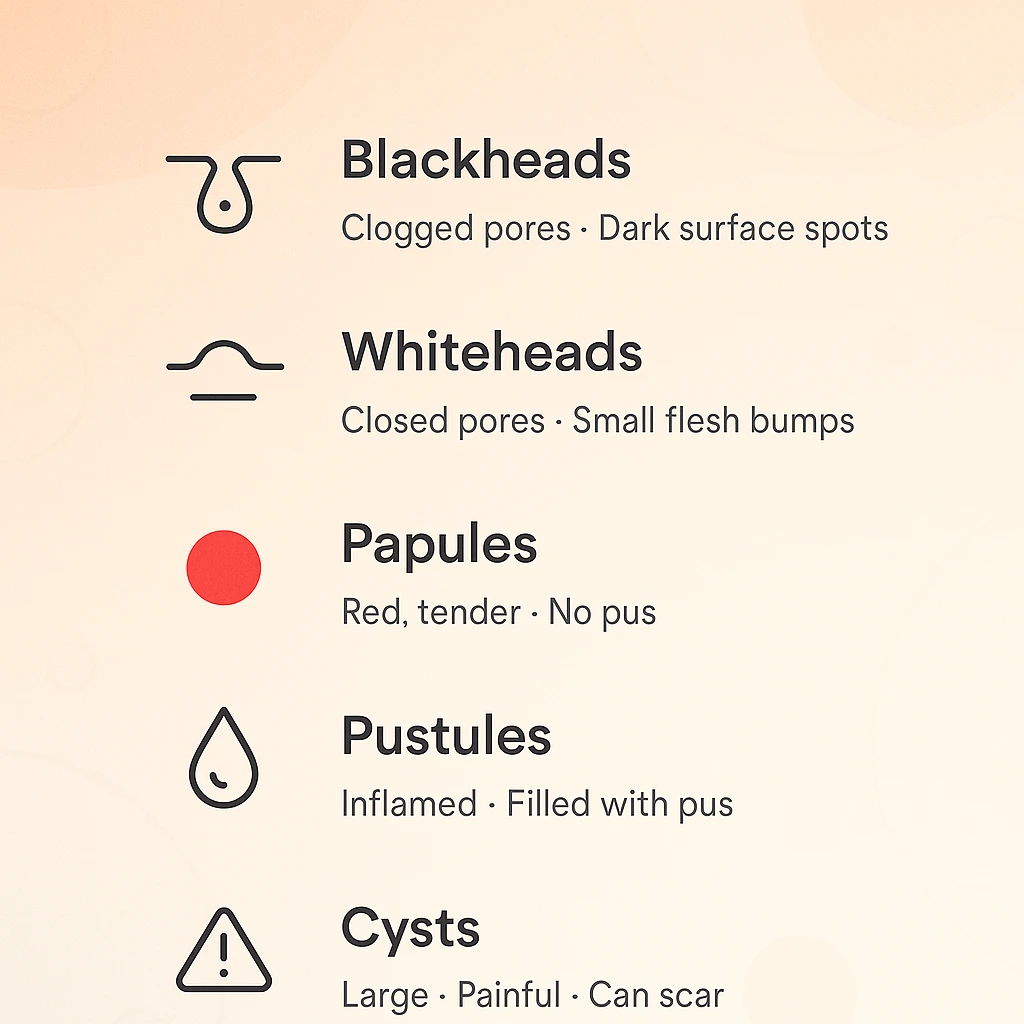
Types of Pimples & Acne
Acne can appear in different forms, and understanding the common acne & pimple types helps in choosing the right treatment. Here are the most frequently seen types:
- Blackheads: Open clogged pores that appear dark on the surface due to oxidation.
- Whiteheads: Closed clogged pores that form small, flesh-colored bumps.
- Papules: Small, red, tender bumps without pus.
- Pustules: Red bumps filled with pus, often inflamed and sensitive.
- Cysts: Large, painful, pus-filled lumps deep under the skin that can cause scarring.
Each type has a slightly different cause and may require a different approach for treatment. For example, blackheads and whiteheads are usually mild and can be treated with over-the-counter products, while cysts often need professional dermatological care.
Treatment & Permanent Solutions
Treating acne and pimples effectively requires a combination of proper skincare, medical treatments, and sometimes home remedies. Here’s a breakdown of the options:
Over-the-Counter Options
Mild to moderate pimples can often be managed with over-the-counter products. Ingredients to look for include:
- Benzoyl peroxide – kills bacteria and reduces inflammation.
- Salicylic acid – unclogs pores and prevents new breakouts.
- Retinoids – help in skin cell turnover and prevent clogged pores.
These treatments are usually effective for pimple types like blackheads, whiteheads, papules, and pustules.
Professional Treatments
For severe or persistent acne, professional treatment may be necessary. Options include:
- Chemical peels – remove the top layer of skin to reduce clogged pores.
- Laser treatments – target bacteria and inflammation while improving skin texture.
- Prescription medications – oral or topical antibiotics, hormonal treatments, or stronger retinoids for long-term acne control.
Acne Home Remedies
Natural remedies can be helpful as supportive care, but precautions are needed:
- Honey – antibacterial and soothing.
- Aloe vera – reduces inflammation and promotes healing.
- Tea tree oil – fights bacteria; dilute before use.
- Green tea – antioxidant-rich, may reduce inflammation.
- Turmeric – natural anti-inflammatory; use in small amounts.
Always test home remedies on a small area first to avoid irritation, especially on dry or sensitive skin. For safer and faster results, professional treatments are usually a better option.
Realistic Outlook: How to Remove Pimples Permanently
While spot treatments and remedies can help manage breakouts, long-term control of acne requires consistent care and sometimes professional guidance.
Regular skincare, healthy lifestyle habits, and addressing underlying causes like hormonal imbalance can help reduce the frequency of pimples and improve overall skin health.
By combining proper over-the-counter treatments, dermatologist care, and safe home remedies, it’s possible to manage acne effectively and work towards minimizing breakouts permanently.
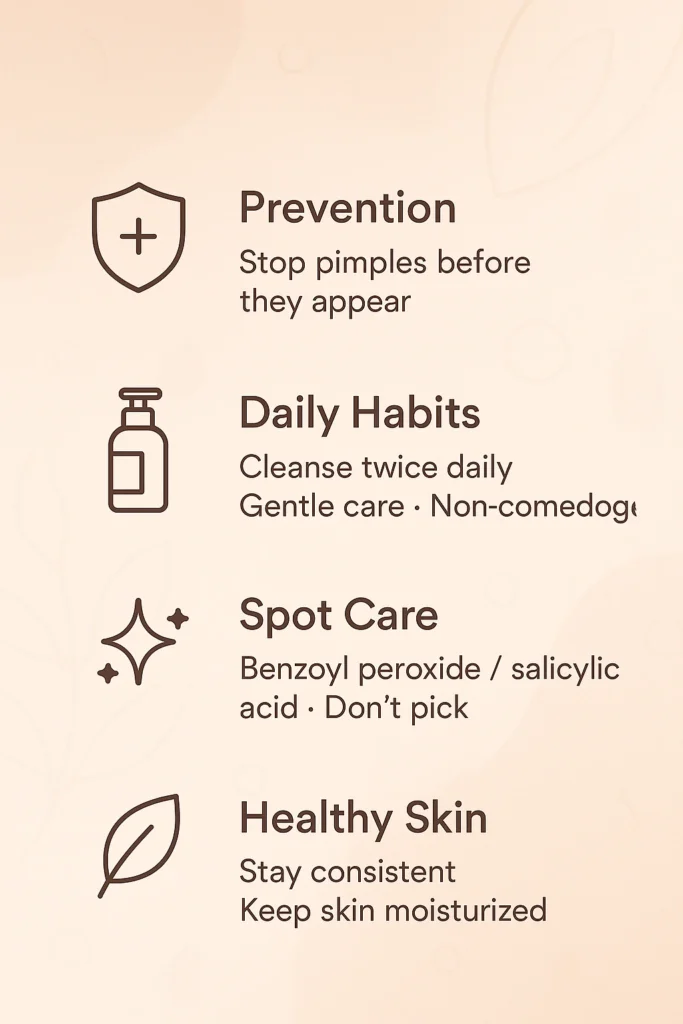
Prevention: Stopping Pimples Before They Grow
Preventing pimples before they appear is always easier than treating them after they develop. By following good daily habits and targeted care, you can keep your skin clearer and healthier.
Daily Habits: How to Avoid Pimples
Maintaining a consistent skincare routine is key. Cleanse your skin gently twice a day, avoid harsh scrubbing, and use non-comedogenic products. Keeping your skin clean and moisturized helps prevent clogged pores, one of the main causes of breakouts.
Spot Care: How to Prevent a Pimple from Growing
If you notice a pimple starting to form, early intervention can stop it from worsening. Use spot treatments containing ingredients like benzoyl peroxide or salicylic acid. Avoid picking or squeezing the pimple, as this can lead to inflammation or scarring.
Long-Term Acne Prevention Strategies
Preventing acne over the long term involves more than just skincare. Healthy lifestyle choices play a big role:
- Follow a balanced diet and stay hydrated.
- Manage stress through exercise, meditation, or hobbies.
- Get sufficient sleep to help your skin repair itself.
- Avoid using heavy or pore-clogging makeup regularly.
By combining proper daily habits, spot care, and lifestyle strategies, you can significantly reduce the frequency of breakouts and maintain healthy skin.
Acne & Dry Skin: Special Considerations
Even dry skin can get acne, but treatment needs to be gentle. To remove acne from dry skin, use a mild cleanser and a lightweight, non-comedogenic moisturizer.
For treating pimples on dry skin, opt for lower-strength spot treatments and always moisturize afterward. Soothing ingredients like aloe vera can help reduce irritation while fighting breakouts.
From Confusion to Clarity: Acne vs Pimples Explained
Acne and pimples are always confusing, but they are not the same. Acne is a long-term skin condition influenced by multiple factors like hormones, oil production, and bacteria, while pimples are individual breakouts and also one of the symptoms of acne.
While home care and lifestyle changes can help manage breakouts, persistent or severe acne often needs professional guidance. If you’re struggling with recurring pimples or unclear skin, consulting a dermatologist is the best way to find safe, effective, and personalized solutions.
FAQs
Yes. Acne is a chronic skin condition caused by clogged pores, oil, and bacteria, while pimples are individual breakouts that occur as a symptom of acne.
Yes. Occasional pimples from stress, sweat, or clogged pores don’t always mean you have acne. Acne usually involves frequent, recurring breakouts.
Acne can be managed with gentle cleansing, over-the-counter products like salicylic acid, and dermatologist treatments for severe cases. Consistency is key.
If breakouts occur often, in different forms (blackheads, whiteheads, cysts), and last for weeks, it’s likely acne rather than just a few random pimples.
Hormonal acne usually appears around the jawline, chin, or during menstrual cycles, while bacterial acne can show up anywhere, often as inflamed, pus-filled pimples.
Use gentle cleansers, hydrating moisturizers, and mild spot treatments. Avoid harsh products that dry out the skin further.
Wash your hair regularly, avoid heavy hair products, and use medicated shampoos with salicylic acid or zinc. For stubborn scalp pimples, see a dermatologist.
Our clinics are located in following cities only, to visit our nearest clinic, contact us |
|
| Pune | Baner |
| Karve Road | |
| Koregaon Park | |
| Hyderabad | Kukatpally |
| Banjara Hills | |
| Jaipur | Bapu Nagar |
| Goa | Porvorim |
| Mumbai | Andheri West |