
Understanding Hyperpigmentation Around the Mouth
Hyperpigmentation is a common skin issue where certain areas become darker than the rest. While it can appear anywhere on your body, the area around your mouth is especially prone to this condition.
Hyperpigmentation is not just about dark patches around your mouth. It can occur on your cheeks, forehead, hands, and even your back. Your skin produces melanin, which gives your skin its color.
Sometimes, your body produces too much melanin in certain areas, causing those spots to look darker. This happens due to sun exposure, hormonal changes, or past acne marks. Anyone can develop hyperpigmentation, regardless of age or skin type.
Research shows that pigmentation issues are particularly common in India. Studies reveal that over 80% of Indian women show signs of uneven skin tone and dark spots. Between 20-30% of women aged 40-65 experience melasma, a common type of pigmentation.
Dermatologists agree that pigmentation affects confidence, emotional health, and overall quality of life. Many people feel embarrassed about these dark patches and spend time trying to hide them with makeup.
The good news is that hyperpigmentation around the mouth can be treated effectively. In this blog, you will learn about the exact causes, proven treatment methods, safe home remedies, and how to prevent it from coming back. This guide will help you achieve clearer, even-toned skin around your mouth.

If you are facing a skin concern, contact our treatment clinic near you |
|
| Pune | Baner |
| Karve Road | |
| Koregaon Park | |
| Hyderabad | Kukatpally |
| Banjara Hills | |
| Jaipur | Bapu Nagar |
| Goa | Porvorim |
| Mumbai | Andheri West |
If you are facing a skin concern, contact our treatment clinic near you
Causes of Hyperpigmentation Around the Mouth
Understanding what causes dark patches around your mouth is the first step to treating them effectively.
1. Sun Exposure
The sun is one of the biggest culprits behind pigmentation. When UV rays hit your skin, your body produces more melanin to protect itself. The area around your mouth receives constant sun exposure, leading to darkening over time.
2. Hormonal Changes
Hormonal shifts play a major role in causing pigmentation, especially in women. Pregnancy, menstruation, birth control pills, and menopause can all trigger excess melanin production. This type of pigmentation, called melasma, often appears on the upper lip and around the mouth requires specialized melasma treatment.
3. Post-Inflammatory Pigmentation
Acne, waxing, burns, or any skin injury can leave behind dark marks. When your skin heals from inflammation, it sometimes produces extra melanin in that area. This is particularly common in people with darker skin tones.
4. Skin Dryness, Irritation, and Friction
Not drinking enough water, skipping moisturizer, or using harsh products can make your skin dry and flaky. Constant friction from rubbing or licking your lips can also darken the skin around your mouth. Smoking and certain cosmetics can worsen the condition.
Are you looking for Pigmentation Treatment?
Discover how our clinical specialists can tailor this protocol to your unique physiological needs.

How to Remove Hyperpigmentation Around the Mouth
Dermatological Treatments for Mouth Pigmentation
For stubborn pigmentation, professional pigmentation treatment offers the fastest results.
1. Chemical Peels
Chemical peels use acids like glycolic acid or lactic acid to remove the top layer of skin and effectively treat pigmentation around the mouth. This helps fade dark patches and reveals fresh, even-toned skin. Most people need 3-5 sessions of chemical peel treatments for visible results.
2. Laser Treatments
Advanced laser therapies target excess melanin beneath your skin without damaging surrounding tissues. Options like Q-switched Nd:YAG laser treatment work by breaking down melanin deposits. Laser treatments show results faster than other methods.
3. Microneedling
Microneedling creates tiny punctures in your skin to stimulate collagen production. When combined with brightening serums, it helps lighten pigmentation while improving overall skin texture.
4. Prescription Creams
Dermatologists may prescribe creams containing hydroquinone, retinoids, or kojic acid. These ingredients effectively reduce melanin production in targeted areas. Results typically appear within 4-8 weeks of consistent use.
Expected Results & Treatment Duration: Professional treatments usually show visible improvement within 4-12 weeks. Complete clearance may take several months depending on the severity of pigmentation.
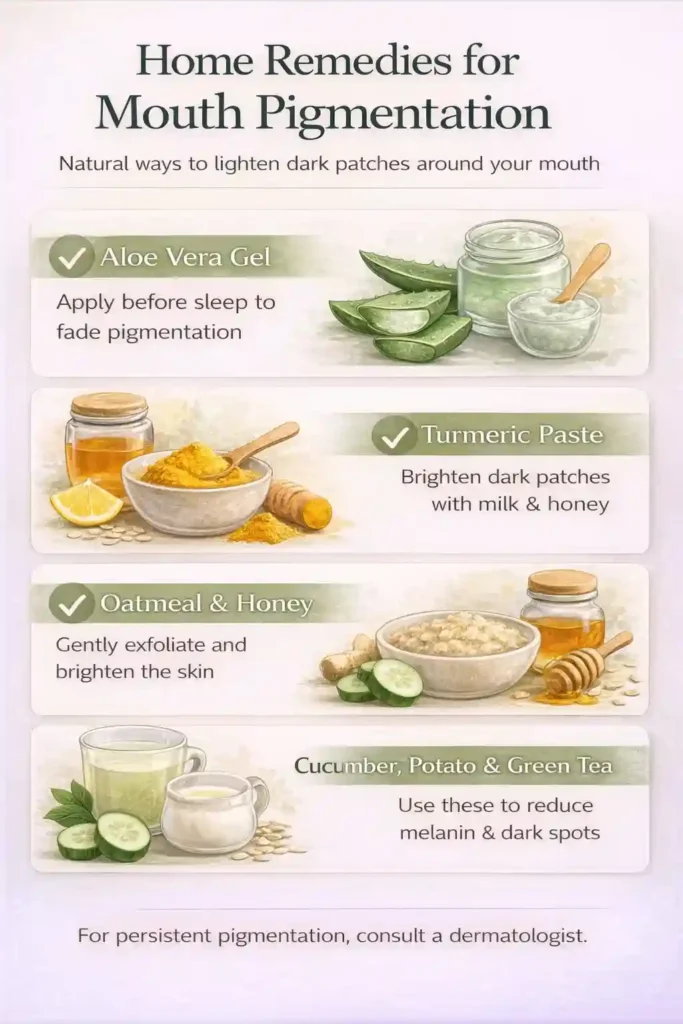
Home Remedies for Mouth Pigmentation
If your pigmentation is mild, several home remedies can help lighten dark patches gradually.
1. Aloe Vera
Fresh aloe vera gel contains aloin, a natural compound that helps fade pigmentation. Apply pure aloe vera gel around your mouth before sleeping. Leave it overnight and rinse in the morning.
2. Turmeric-Based Remedies
Mix half a teaspoon of turmeric powder with milk or honey to form a paste. Apply this on the dark areas and leave for 15-20 minutes before rinsing. Turmeric has anti-inflammatory properties that help reduce pigmentation. Use this 2-3 times per week.
3. Oatmeal & Honey
Combine ground oatmeal with honey to create a gentle exfoliating mask. Oatmeal removes dead skin cells while honey moisturizes and brightens. Apply for 15 minutes, then rinse with lukewarm water.
4. Natural Soothing Agents
Cucumber juice, potato juice, and green tea can help lighten dark patches. These ingredients contain antioxidants that reduce melanin production.
Safe Usage Tips
- Always do a patch test before trying new ingredients
- Avoid lemon juice if you have sensitive skin
- Be consistent with your chosen remedy for at least 4-6 weeks
- Never apply home remedies immediately before sun exposure
Skincare Routine That Helps Fade Pigmentation
Building the right skincare routine is crucial for treating and preventing hyperpigmentation.
- Gentle Exfoliation: Exfoliate 2-3 times per week using gentle chemical exfoliants like lactic acid or glycolic acid. These help remove dead skin cells. Avoid harsh physical scrubs that can irritate the skin.
- Vitamin C: Vitamin C is a powerful antioxidant that brightens skin and fades dark spots. Use a vitamin C serum every morning after cleansing. It helps protect your skin from sun damage while lightening existing pigmentation.
- Niacinamide: Niacinamide (Vitamin B3) is excellent for reducing pigmentation. Look for serums or moisturizers containing 4-5% niacinamide and use them daily for best results.
- Moisturizer: Keep your skin hydrated with a good moisturizer containing hyaluronic acid or glycerin. Apply moisturizer twice daily, especially around the mouth area.
- Sunscreen: This is the most important step. Use a broad-spectrum sunscreen with SPF 30 or higher every single day, even when staying indoors. Reapply every 2-3 hours if you are outdoors.

Side Effects of Pigmentation Treatments
While treating hyperpigmentation, you may experience some mild side effects.
- Redness or Peeling: Chemical peels and certain active ingredients can cause temporary redness and peeling. This is normal as your skin sheds the damaged layer. Keep your skin moisturized and avoid picking at flaking skin.
- Sun Sensitivity: Treatments like chemical peels, retinoids, and laser therapy make your skin more sensitive to sunlight. Always wear sunscreen after these treatments.
- Irritation from Strong Actives: Ingredients like retinoids or high-concentration acids may cause initial irritation. Start with lower concentrations and gradually increase as your skin adjusts.
- When to Discontinue Use: Stop using a product immediately if you experience severe burning, excessive redness, or swelling. Consult your dermatologist before continuing any treatment.
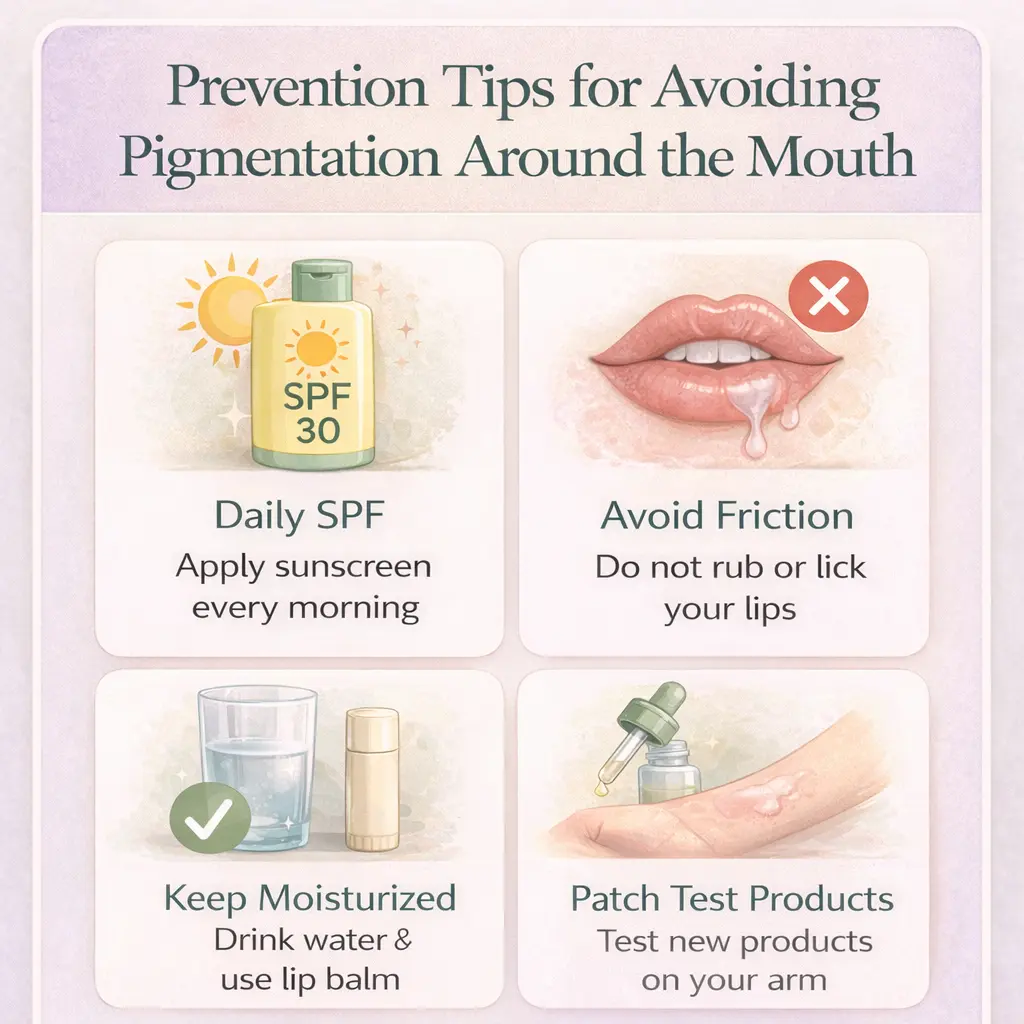
Prevention Tips for Avoiding Pigmentation Around the Mouth
Prevention is always better than treatment. Follow these simple tips to keep your skin clear.
- Daily SPF: Apply sunscreen every morning, regardless of weather or season. UV rays can penetrate through clouds and even windows.
- Avoiding Friction: Do not rub the area around your mouth harshly. Be gentle when applying products. Stop the habit of licking your lips as saliva can darken the surrounding skin.
- Managing Dryness: Drink at least 8 glasses of water daily. Use a good lip balm and apply moisturizer around your mouth regularly.
- Product Patch-Testing: Before using new skincare products or cosmetics near your mouth, always do a patch test on your inner arm. This helps prevent reactions that could lead to pigmentation.
When to Consult a Dermatologist
While home remedies work for mild cases, sometimes professional help is necessary.
- If Pigmentation is Persistent: If your dark patches do not improve after 8-12 weeks of consistent home treatment, it is time to see a dermatologist. Stubborn pigmentation may require prescription-strength treatments.
- If Irritation Worsens: If products or treatments cause severe irritation, burning, or unexpected reactions, stop immediately and consult a dermatologist.
- If Home Care Doesn’t Improve the Area: When over-the-counter products and natural remedies fail to show results, a dermatologist can assess the depth of pigmentation and suggest appropriate medical treatments.
Your Path to Clearer, Even-Toned Skin
Dealing with hyperpigmentation around your mouth can be frustrating, but with the right approach, you can achieve significant improvement. Remember that treating pigmentation requires patience and consistency. Results do not appear overnight.
Whether you choose professional hyperpigmentation treatments or home remedies, the key is to stick with your routine. Combine active treatments with proper sun protection for best results. Professional dermatological treatments can accelerate your progress, especially for deep pigmentation.
Most importantly, do not forget about long-term maintenance. Once your pigmentation fades, continue using sunscreen daily and maintain your skincare routine. With commitment and the right care, you can enjoy clear, even-toned skin around your mouth and regain your confidence.
FAQs
The fastest results usually come from dermatological treatments like chemical peels, laser therapy, or prescription creams. These speed up skin cell turnover and target deeper pigmentation more effectively than home remedies.
Dark spots near the mouth often occur due to sun exposure, hormonal changes, irritation, or post-inflammatory pigmentation from acne or dryness. Constant rubbing or lip licking can also darken the area.
Most hyperpigmentation around the mouth is not permanent. With consistent skincare, sun protection, and professional treatments if needed, the skin tone can gradually return to normal.
You can clear pigmentation by using activities like vitamin C, niacinamide, retinoids, and sunscreen daily. For faster results, dermatological treatments like peels, lasers, and prescription creams work best.
Indians have more melanin, making their skin prone to tanning, hormonal pigmentation, and post-inflammatory marks. Factors like sun exposure, heat, and friction also worsen darkening around the mouth.
Dermatologists use chemical peels, laser treatments, microneedling, and prescription creams like hydroquinone or tretinoin. These target pigment at different skin layers for faster, long-lasting results.
Mild hyperpigmentation can fade naturally over months as skin renews itself. However, deeper or long-standing pigmentation usually needs targeted skincare or dermatologist-led treatments to fully clear.