Why Post Pregnancy Hair Fall Happens
Every new mother deserves to feel confident and beautiful. But when you see more hair on your brush than on your head, it can be deeply worrying. Around 40 to 50 percent of women experience noticeable hair shedding after delivery. While you focus on caring for your newborn, watching clumps of hair fall out can make you anxious about your appearance.
Research shows that up to 90 percent of women experience some degree of hair fall after childbirth. This condition is called telogen effluvium or postpartum alopecia. It typically starts around 2 to 4 months after delivery and peaks at 4 to 5 months.
The good news? This is temporary. Most women see their hair returning to normal within 6 to 12 months. Expert dermatologists can help speed up recovery with proper treatment.
During pregnancy, higher estrogen levels keep your hair in the growth phase longer, giving you thick locks. After delivery, estrogen drops suddenly, pushing many hair follicles into the resting phase at once.
This leads to noticeable shedding a few months later. In this guide, you will discover proven treatments, home remedies, and preventive measures to regain your hair health.

If you are facing a skin concern, contact our treatment clinic near you |
|
| Pune | Baner |
| Karve Road | |
| Koregaon Park | |
| Hyderabad | Kukatpally |
| Banjara Hills | |
| Jaipur | Bapu Nagar |
| Goa | Porvorim |
| Mumbai | Andheri West |
If you are facing a skin concern, contact our treatment clinic near you
Postpartum Hair Loss Symptoms
Recognizing the signs helps you take action at the right time:
- Increased shedding: More hair than usual on your pillow, hairbrush, or shower drain
- Thinning hair: Less voluminous appearance all over
- Visible scalp: More scalp showing through your hair, especially at the crown
- Loose strands: Hair comes out easily when touching or washing
- Baby hairs: New short hairs appearing along your hairline as regrowth begins
When It Starts and How Long It Lasts
Hair fall typically begins around 2 to 4 months after delivery and peaks around 4 to 5 months postpartum. For most women, this phase lasts about 3 to 6 months before returning to normal. By your baby’s first birthday, your hair should be back to normal. If hair loss continues beyond one year, consult a dermatologist to rule out other conditions.
Post Pregnancy Hair Fall Treatment
Medical & Dermatologist-Recommended Treatments
When home care is not enough, professional medical treatments can help restore your hair faster. Dermatologists offer several effective options for treating excessive postpartum hair fall.
Clinical Treatments Available:
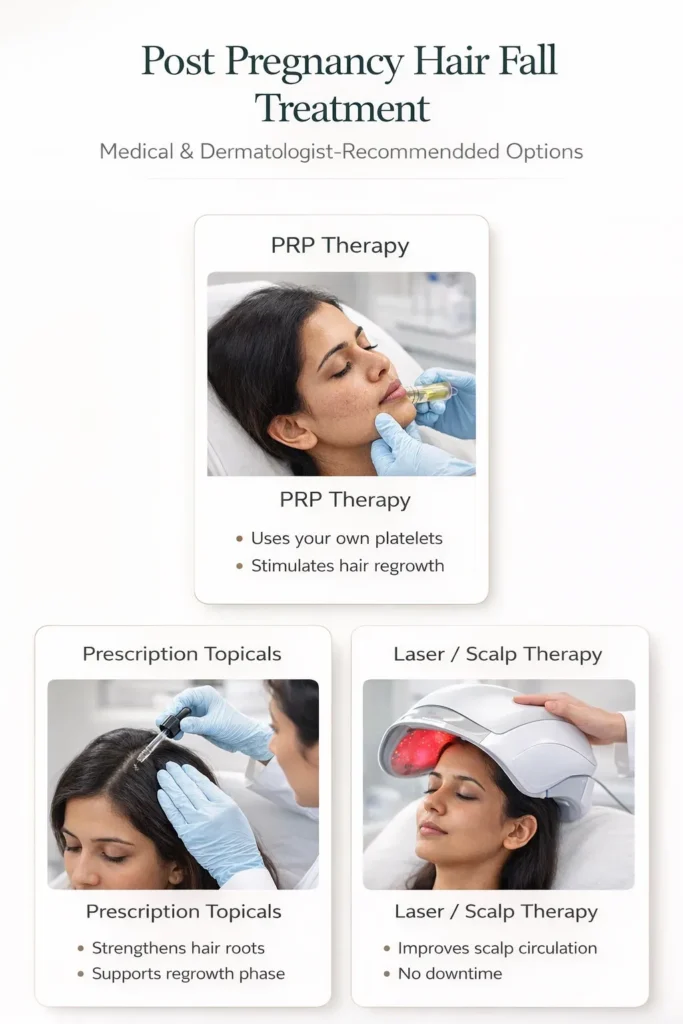
- Platelet-Rich Plasma Therapy: PRP therapy uses your own blood platelets to stimulate hair follicles. A small amount of blood is drawn, processed to concentrate the platelets, and injected into your scalp. The growth factors in platelets promote new hair growth. Most patients see results within 4 to 6 months. This treatment is considered safe since it uses your own blood components.
- Topical Hair Growth Solutions: Dermatologists may prescribe topical solutions that increase blood flow to the scalp and extend the hair growth phase. These are applied directly to the scalp and can help speed up regrowth. However, breastfeeding mothers should always consult their doctor before using any such products.
- Low-Level Laser Therapy: This non-invasive treatment uses specific wavelengths of light to stimulate hair follicles. It improves blood circulation to the scalp and may help promote hair regrowth without any downtime.
- Scalp Treatments: Professional scalp treatments include hydrodermabrasion with growth factors, which exfoliates the scalp while delivering essential nutrients to boost circulation and follicle health.
Home-Based Postpartum Hair Loss Remedies
While you wait for your hormones to balance, several home remedies can support hair health and reduce shedding. These natural approaches are safe for new mothers.
Natural Remedies to Try:
- Coconut oil massage: Regular scalp massage with warm coconut oil improves blood circulation and nourishes hair follicles. Leave it on for a few hours or overnight before washing with a mild shampoo.
- Fenugreek seed treatment: Soak fenugreek seeds overnight in water. Apply the strained water to your scalp the next morning and leave for two hours. This helps strengthen hair roots and reduce dandruff problems.
- Egg and olive oil mask: Mix egg whites with three tablespoons of olive oil to create a nourishing hair pack. Apply to your scalp and hair, leave for 30 minutes, then wash thoroughly. This combination provides protein and healthy fats.
- Yogurt conditioning: Apply fresh yogurt to your scalp and hair. Leave for 10 to 15 minutes before rinsing with water. Yogurt acts as a natural conditioner and promotes healthy hair growth.
Important Note: While these home remedies can support hair health, they work best as complementary care. For excessive hair fall that concerns you, consulting a dermatologist ensures you receive proper medical treatment tailored to your specific needs.
Nutritional Support for Recovery
What you eat plays a major role in hair health. Your body needs specific nutrients for strong, healthy hair after pregnancy.
Key Nutrients for Hair Regrowth:
- Protein: Hair is made of protein. Include eggs, lean meat, fish, lentils, and dairy.
- Iron: Iron deficiency worsens hair loss. Eat spinach, beans, red meat, and fortified cereals.
- Biotin (Vitamin B7): Supports hair health. Include biotin-rich foods like nuts, seeds, eggs, and whole grains in your diet.
- Omega-3 fatty acids: Nourishes hair follicles. Include fatty fish, walnuts, and flaxseeds.
- Zinc: Supports hair growth and repair. Good sources include pumpkin seeds and chickpeas.
- Vitamin D: Low levels linked to hair loss. Get sunlight and eat fortified milk and fatty fish.
For faster nutrient absorption, some mothers also consider IV vitamin therapy, which delivers essential vitamins directly into the bloodstream


Postpartum Hair Loss Prevention
While you cannot completely prevent postpartum hair fall, certain practices can minimize severity and support recovery.
Practical Preventive Habits:
- Continue taking prenatal or postnatal vitamins
- Drink at least 2 to 3 liters of water daily
- Get adequate rest whenever possible
- Practice stress management through yoga or meditation
- Avoid crash diets during postpartum
How to Manage Hair Gently
- Use wide-toothed combs instead of fine-toothed ones
- Be extra gentle when brushing wet hair
- Avoid tight hairstyles like ponytails or braids
- Skip heat styling tools like straighteners and blow dryers
- Pat hair dry gently instead of rubbing
- Avoid chemical treatments during this phase
Lifestyle Adjustments for Healthy Regrowth
- Maintain a balanced sleep schedule
- Include light exercise to improve circulation
- Protect hair from sun damage
- Be patient with the regrowth process
- Seek emotional support to reduce stress
Postpartum Hair Care Routine
Following proper hair care practices becomes even more important during the postpartum phase.
Shampooing, Conditioning, and Oiling
Ideal Hair Care Routine:
- Shampoo 2 to 3 times per week with a mild, sulfate-free formula
- Use volumizing shampoos that add body
- Apply conditioner only to the hair ends, not the scalp
- Choose lightweight conditioners for thin hair
- Oil your scalp once or twice weekly with coconut or almond oil
- Give yourself a gentle scalp massage while oiling
Do’s and Don’ts for Postpartum Hair Care
Do: Be patient, use gentle products, trim regularly, consider shorter styles, use silk pillowcase
Don’t: Use heavy conditioners, apply too much product, rush into chemical treatments, compare timelines, panic
Safe Products During Breastfeeding
Choose natural, chemical-free options when possible. Always wash hands after applying scalp treatments. Consult your doctor before using medicated products or supplements.

When to Seek Medical Help
Most postpartum hair loss resolves naturally, but certain warning signs require professional evaluation.
Red Flags Indicating Non-Postpartum Issues
Consult a doctor immediately if you notice:
- Hair loss continuing after 12 months postpartum
- Sudden, patchy bald spots
- Severe scalp itching, burning, or inflammation
- Hair loss with fatigue or weight changes
- Extreme thinning affecting your self-esteem
Conditions Like Thyroid Issues and Anemia
Sometimes ongoing hair loss signals an underlying condition:
- Thyroid disorders: Both overactive and underactive thyroid cause hair loss. Blood tests can check levels.
- Iron deficiency anemia: Low iron leads to excessive shedding. Tests identify it, supplements correct it.
- Vitamin deficiencies: Low vitamin D, B12, or zinc levels contribute to loss, as certain vitamin deficiencies directly impact hair health.
- Hormonal imbalances: Sometimes hormones don’t normalize, requiring medical intervention.
- Autoimmune conditions: Like alopecia areata causing patchy loss needing specialized treatment.
A thorough medical evaluation helps identify these issues early and ensures appropriate treatment.
Regaining Hair Health After Pregnancy
Post pregnancy hair fall is a natural, temporary condition affecting most new mothers. While increased shedding can be distressing, it’s your body’s way of returning to normal after hormonal changes.
Several effective hair treatments, ranging from clinical procedures to at-home care, can help you manage this condition. From professional therapies like platelet-rich plasma and topical solutions to gentle home remedies and proper nutrition, you have many options. The key is patience while taking good care of your hair and overall health.
Most women see hair returning to normal within 6 to 12 months. If loss continues beyond a year or you notice concerning symptoms, don’t hesitate to seek professional help. Remember, taking care of yourself is essential as you embrace the wonderful journey of motherhood.
FAQs
You can reduce postpartum hair loss by following a gentle hair care routine, maintaining a nutrient-rich diet, managing stress, and avoiding tight hairstyles or heat styling. Consistent scalp massages and using strengthening shampoos also help support regrowth.
Postpartum hair loss usually starts around 2–4 months after delivery and can last for 4–6 months. Most women see improvement by the baby’s first birthday.
Strengthening shampoos, peptide serums, biotin-based formulations, and mild hair-thickening products are helpful. Dermatologist-recommended serums and products designed to reduce breakage can also support regrowth.
Minoxidil may help speed up regrowth if postpartum shedding is severe, but it should only be used under a dermatologist’s guidance. Breastfeeding mothers must consult a doctor before using it.
Deficiencies in iron, vitamin D, and B12 are the most common contributors to postpartum hair fall. Low ferritin levels especially affect hair strength and growth.
Biotin, vitamin D, iron, zinc, and B-complex vitamins support healthy hair growth. These nutrients help strengthen follicles and improve hair density.
Regrowth improves with a balanced diet, scalp stimulation, gentle hair care, and hair-strengthening serums. If shedding is excessive, professional treatments like PRP or supplements recommended by a dermatologist may help.
Signs include sudden excessive shedding, noticeable thinning near the temples or crown, and increased hair fall during brushing or washing. The scalp may appear more visible in certain areas.