What is Retinol?
When skin starts to look tired or uneven, people want a solution that truly works. This is where retinol often gets attention.
Everyone talks about it and says it works well. But the big question is still the same: is retinol really good for skin?
Retinol is a form of Vitamin A. It has been used by skin experts for many years. It is one of the most tested and trusted ingredients in skincare.
Many dermatologists call it the gold standard anti-aging treatments ingredient for skin renewal and acne care. In this blog, you will learn what it does in a simple and clear way.
Retinol can help your skin make more collagen. It can work as an effective dark spots treatment and help clear clogged pores when used consistently. It can give great results when you use it the right way. Its effects can also change based on your skin type and how you add it to your routine.
So before you start using it, let us find out: What is retinol and is it truly good for your skin?

If you are facing a skin concern, contact our treatment clinic near you |
|
| Pune | Baner |
| Karve Road | |
| Koregaon Park | |
| Hyderabad | Kukatpally |
| Banjara Hills | |
| Jaipur | Bapu Nagar |
| Goa | Porvorim |
| Mumbai | Andheri West |
If you are facing a skin concern, contact our treatment clinic near you
What Does Retinol Do for Skin?
How Retinol Works
Retinol goes deep into your skin and works at the cellular level. It speeds up the natural process of skin renewal. Your skin already sheds old cells and creates new ones. But as you age, this process slows down. Retinol gives it a boost, helping your skin work faster and more efficiently.
Key Actions of Retinol
- Boosts Collagen: Collagen keeps skin firm. Retinol helps create more collagen, making skin plump and youthful.
- Speeds Cell Turnover: Dead cells make skin dull. Retinol removes old cells quickly, bringing fresh ones to the surface.
- Reduces Pigmentation: Retinol slows melanin production, fading dark spots and evening skin tone, making it effective for pigmentation treatment alongside professional options.
Retinol Skin Benefits
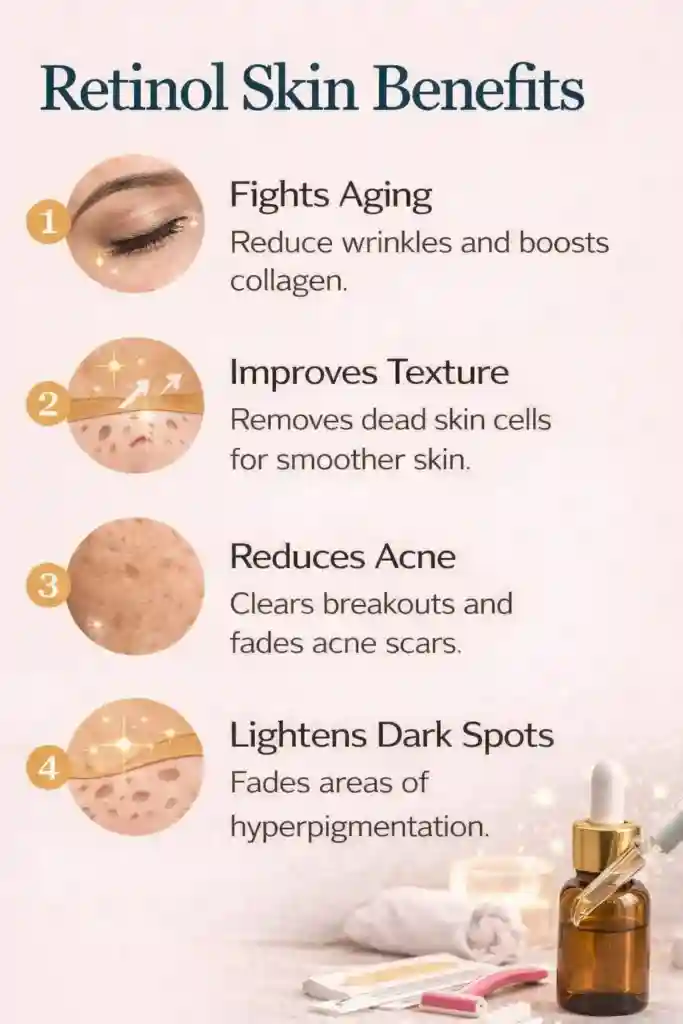
1. Anti-Aging Benefits
Retinol fights signs of aging by building collagen. Fine lines and wrinkles appear when collagen breaks down. Retinol helps build it back up. With regular use, you may see fewer fine lines, reduced wrinkles, firmer skin, and a more youthful appearance.
2. Smoother Texture and Brighter Tone
Retinol removes dead skin cells, revealing fresh skin underneath – similar to chemical peel treatment but with gentler, gradual exfoliation. If your skin feels rough or looks dull, retinol can help. Your skin becomes smoother, softer, brighter, and more even in texture. You get a natural glow.
3. Acne Reduction
Retinol is excellent for acne-prone skin. It helps by unclogging pores, reducing oil production, preventing blackheads, and healing existing acne faster. Many people see clearer skin and can remove acne scars after a few months of consistent use.
4. Dark Spot Improvement
Retinol fades sun damage and mild acne scars, though professional acne scar treatment may be needed for deeper scarring. It does this by speeding up removal of damaged cells and evening out skin tone. Over time, dark patches become lighter and less noticeable, similar to how dark circles treatment works with targeted care.
Retinol for Different Skin Types
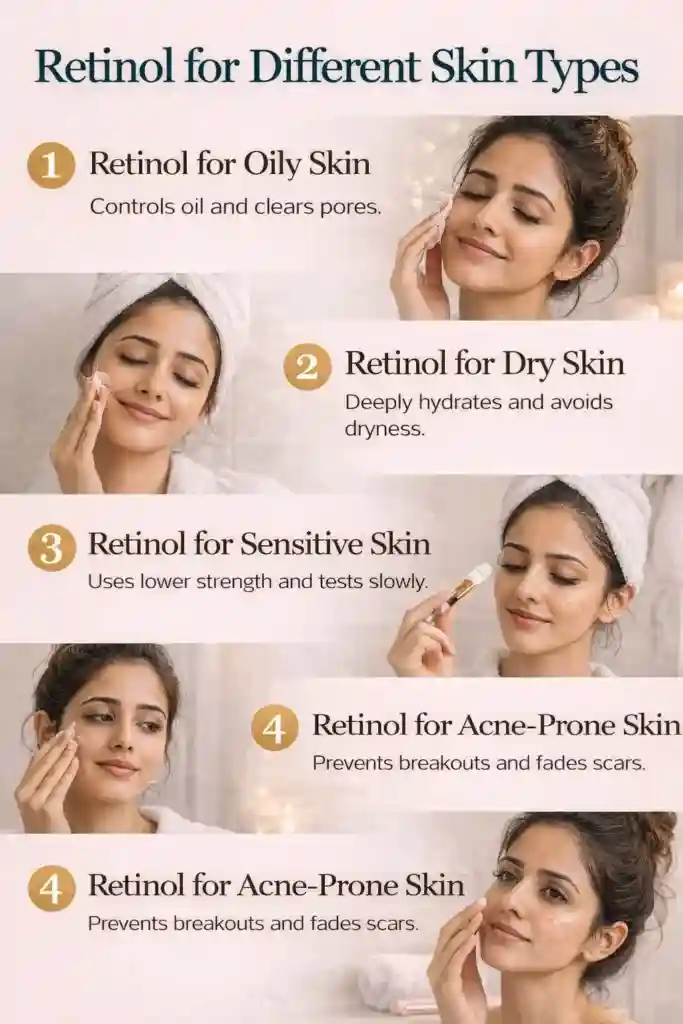
1. Retinol for Oily Skin
Oily skin benefits from retinol as it controls excess oil and prevents clogged pores when used in a proper oily skin care routine. Start with lower strength 2 to 3 times per week. Always use a light moisturizer after.
2. Retinol for Dry Skin
Dry skin needs extra care, especially during winter skin care months. Choose cream-based retinol and use a rich moisturizer on top. Start slowly to avoid worsening dryness.
3. Retinol for Sensitive Skin
Use lower concentrations (0.25% to 0.3%) once or twice weekly. If burning or stinging persists, stop and consult a doctor.
4. Retinol for Acne-Prone Skin
Retinol prevents breakouts and heals scars. You may see purging (more pimples) in the first few weeks as hidden acne surfaces. Keep going, skin should clear after this phase.
Who Should Be Cautious
Avoid or use carefully if you are pregnant, breastfeeding, have very sensitive skin, eczema, or sunburned skin. Consult a doctor if unsure.
How to Use Retinol Safely
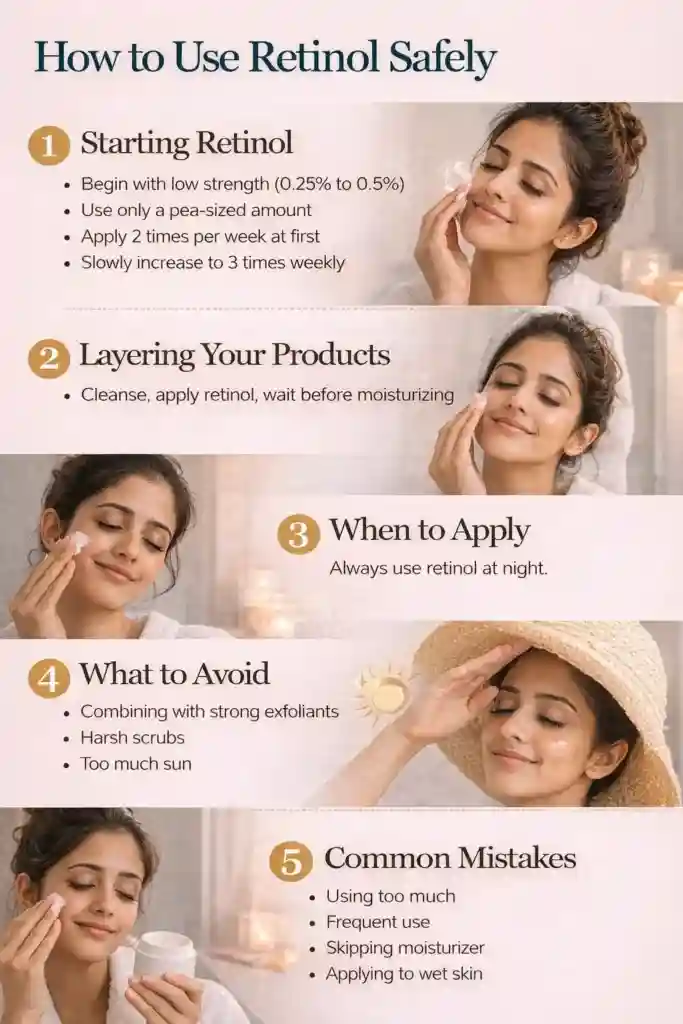
1. Starting Retinol
- Begin with low strength (0.25% to 0.5%)
- Use only a pea-sized amount
- Apply 2 times per week at first
- After 2 to 3 weeks, increase to 3 times weekly
- Slowly work up to every other night or nightly if tolerated
2. Layering Your Products
Follow this order: cleanse, pat dry, wait 5 to 10 minutes, apply retinol, wait again, then apply moisturizer. You can also buffer by applying moisturizer first, then retinol on top.
3. When to Apply
Always use retinol at night. Skin becomes sun-sensitive, and sunlight makes retinol less effective.
4. What to Avoid
- Other strong ingredients (AHA, BHA) on the same night
- Harsh scrubs
- Too much sun
- Applying to wet skin
5. Common Mistakes
Using too much, starting with high strength, skipping sunscreen, or giving up too soon.
Side Effects and How to Minimize Them
1. Retinol Purging
Purging means more breakouts at first as hidden acne surfaces faster. This usually lasts 2 to 4 weeks. If it continues beyond 6 weeks, consult a doctor.
2. Dryness, Redness, and Irritation
Common side effects include dry, flaky skin, redness, peeling, and mild burning. These are usually temporary while skin adjusts.
3. How to Reduce Sensitivity
- Use retinol less often
- Apply good moisturizer every time
- Choose a gentler formula
- Take breaks if needed
- Never skip sunscreen (SPF 30 or higher)
Stop using retinol and see a doctor if side effects worsen or persist beyond a few weeks.
Is Retinol Really Good for Your Skin?
Yes, for most people, retinol is safe and effective. It is backed by decades of research. When used properly, it improves many skin concerns, working well alone or with skin rejuvenation treatment for enhanced results. But it takes time and patience.
Start with low strength. Go slow. Listen to your skin. Use sunscreen every day. If you follow these steps, retinol can be one of the best additions to your routine.
Remember, everyone’s skin is different. If you have concerns, talk to a dermatologist. They can guide you to the best retinol product for your skin type and goals. With the right approach, you may see smoother, clearer, and younger-looking skin in just a few months.
Thinking About Using Retinol for Your Skin?
If you are planning to add retinol to your skincare routine but are unsure how to start, the skin experts at Reborn Skin and Hair Clinic can guide you with the right advice.
Our dermatologists create simple and safe retinol routines based on your skin type, concerns and sensitivity level. Whether you want help with acne, fine lines or pigmentation, our team can help you understand how to use retinol in the best way for your skin.
Visit Us at Our Convenient Locations:
Pune: Baner Clinic, Karve Road Clinic, Koregaon Park Clinic
Hyderabad: Kukatpally Clinic, Banjara Hills Clinic
Mumbai: Andheri Clinic
Jaipur: Bapu Nagar Clinic
Goa: North Goa Clinic
FAQs
You can use retinol every day, but only after your skin gets used to it. Beginners should start 2 to 3 times a week and slowly increase the frequency. Daily use is safe when your skin shows no irritation.
Retinol can cause dryness, redness, peeling and irritation, especially in the first few weeks. These effects reduce as your skin adjusts. Using moisturizer and starting slowly can help prevent problems.
Yes, most dermatologists recommend retinol because it is one of the most proven ingredients for anti aging, acne and pigmentation. It works well when used the right way and in the right strength.
Most people can start retinol in their mid to late 20s when early signs of aging begin. You can start earlier if you have acne, but always follow a dermatologist’s advice.
Pregnant or breastfeeding women should avoid retinol. People with very sensitive or irritated skin should also use caution. It is best to check with a dermatologist before starting.
If you stop retinol, your skin will slowly return to its natural aging pace. Fine lines and texture may come back over time, but there is no long-term harm from stopping it.