
Top 10 Best Treatments for Under-Eye Dark Circles
Dark circles can change the way your whole face looks. Even after a full night’s sleep, the skin under the eyes may appear darker, making you look tired or older than you feel. It is a concern people notice quickly because the under-eye area is thin and delicate.
For many, these shadows become part of daily life. You may try concealers, cold spoons, or extra sleep, yet the darkness still shows.
Work stress, long screen hours, sun exposure, allergies, and family traits can all contribute – learn more about dark circle causes and how they differ by person. When the under-eye area looks dull, it can affect how confident and refreshed you appear.
What makes this concern confusing is that dark circles do not have a single cause. In some people, extra pigment creates darkness. In others, thinning skin makes blood vessels more visible. Puffiness, tear trough hollowness, or dehydration can also create shadowing that looks like dark circles.
Today, there are many ways to improve the under-eye area, from simple habit changes to dermatologist-guided treatments. The real improvement begins when you understand what is causing your dark circles.
Before choosing a solution, it is worth discovering what type of dark circles you have and why they appear in the first place.

If you are facing a skin concern, contact our treatment clinic near you |
|
| Pune | Baner |
| Karve Road | |
| Koregaon Park | |
| Hyderabad | Kukatpally |
| Banjara Hills | |
| Jaipur | Bapu Nagar |
| Goa | Porvorim |
| Mumbai | Andheri West |
If you are facing a skin concern, contact our treatment clinic near you
Why It Matters to Know Your Dark Circle Type
Before picking a treatment, it helps to understand the type of dark circles you have:
- Vascular (blue or purple tone): Caused by poor blood circulation or visible blood vessels under thin skin. Often worsens with lack of sleep or dehydration.
- Pigmentation (brown or dark tone): Caused by excess melanin due to sun exposure, allergies, or eye rubbing.
- Structural (shadow-based): Caused by volume loss or skin thinning due to aging, which creates a hollow, shadowed look.
Knowing your type helps you pick the treatment that will actually work.
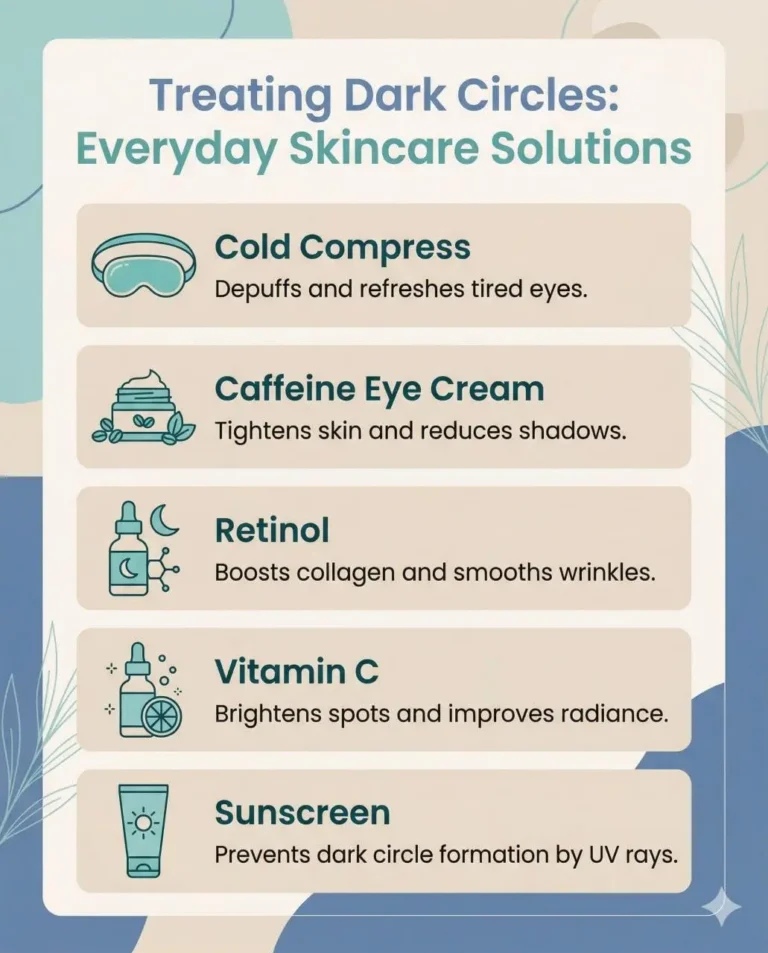
Top 10 Best Treatments for Under-Eye Dark Circles
1. Cold Compress
This is the simplest and most affordable option. Applying a cold compress helps shrink blood vessels and reduce puffiness around the eyes. It gives quick, short-term relief.
How to use: Wrap a few ice cubes in a soft cloth or use chilled cucumber slices. Place them under your eyes for 10 minutes. Repeat twice daily for best results.
Best for: Vascular dark circles and puffiness.
2. Caffeine-Based Eye Creams
Caffeine is one of the most effective ingredients for under-eye dark circles. It tightens blood vessels and reduces the appearance of darkness. Look for creams that combine caffeine with Vitamin C or Vitamin K for better results.
Best for: Vascular dark circles and under-eye puffiness.
3. Retinol and Retinoid Creams
Using retinol for skin can help build collagen and thicken the delicate skin under the eyes. Over time, it makes blood vessels less visible and reduces fine lines.
Tips for use:
- Use only at night
- Start with a low-strength formula
- Always apply a moisturizer after to avoid dryness
Best for: Structural and aging-related dark circles.
4. Vitamin C Serums and Brightening Creams
Vitamin C is a powerful ingredient that reduces pigmentation and brightens the skin. It works even better when used with daily sunscreen.
Key ingredients to look for:
- Vitamin C
- Niacinamide
- Kojic acid
- Azelaic acid
Best for: Pigmentation-based dark circles.
5. Sunscreen (SPF Protection)
Sun exposure increases melanin production, which worsens dark circles over time. Applying sunscreen around the eyes every morning is one of the easiest ways to prevent and manage dark circles.
Choose a sunscreen that is gentle, fragrance-free, and suitable for the eye area. Use SPF 30 or higher every day, even on cloudy days.
Best for: All types of dark circles, especially pigmentation.
6. Chemical Peels
There are several chemical peel types that use mild acids like glycolic, lactic, and kojic acid to remove the top layer of pigmented skin.
What to expect:
- 3 to 4 sessions are usually needed
- The procedure is done under professional supervision
- Mild redness or peeling may occur after each session
- Results become visible within a few weeks
Best for: Pigmentation-based dark circles. Must be done by a trained dermatologist.
7. Laser Therapy
Laser for dark circles is one of the most effective clinical options, using types like fractional CO2, pulsed dye, and Q-switch to break down pigment and boost collagen.
Benefits of laser therapy:
- Reduces pigmentation
- Increases skin thickness
- Stimulates new collagen
- Improves overall skin tone around the eyes
Best for: Pigmentation and vascular dark circles. Results are visible after multiple sessions.
8. Hyaluronic Acid Fillers (Tear Trough Filler)
When dark circles are caused by volume loss, fillers are the most effective option. A dermatologist administers fillers by injecting hyaluronic acid into the hollow area under the eye to restore volume and reduce shadows. This adds volume, reduces shadows, and creates a smoother appearance.
Key points:
- Results are visible almost immediately
- Effects last around 12 to 18 months
- Must be done only by an experienced professional
Best for: Structural, hollow, or shadow-based dark circles.
9. PRP Therapy (Platelet-Rich Plasma)
Understanding PRP therapy benefits can help you see why this treatment uses your own blood platelets to heal and rejuvenate the under-eye skin naturally. The platelets are processed and injected under the eyes, where they stimulate collagen and elastin production.
- Considered a natural treatment with low risk of side effects
- Requires 3 to 4 sessions spaced about a month apart
- Results can last up to 12 to 18 months
Best for: Thin skin, overall rejuvenation, and early signs of aging under the eyes.
10. Blepharoplasty (Eyelid Surgery)
For severe cases where other treatments do not work, eyelid surgery (blepharoplasty) is a long-lasting option worth considering. This procedure removes or repositions excess fat and skin under the eyes. It provides long-lasting results.
Consider this when:
- Dark circles are caused by excess skin or fat pads
- Non-surgical treatments have not given enough improvement
- The structural issue is significant
Best for: Advanced structural dark circles with skin laxity or fat protrusion.
Lifestyle Changes That Support Every Treatment
No matter which treatment you choose, these daily habits will support and speed up results:
- Get 7 to 9 hours of quality sleep every night
- Drink enough water and stay hydrated throughout the day
- Manage allergies to avoid rubbing your eyes
- Avoid smoking and limit alcohol intake
- Remove eye makeup gently and carefully every night
How to Choose the Right Treatment for Your Dark Circles
| Dark Circle Type | Best Treatments |
|---|---|
| Vascular (blue/purple) | Cold compress, caffeine creams, laser |
| Pigmentation (brown) | Vitamin C, chemical peels, laser, sunscreen |
| Structural (shadows) | Fillers, PRP, retinol, blepharoplasty |
If you are unsure about your type, visit a dermatologist. They will examine your under-eye area and suggest a treatment plan that works best for your skin.
Under-eye dark circles are not a one-size-fits-all problem. What works for one person may not work for another. The key is to understand the cause first and then pick the right treatment.
For mild dark circles, starting with home remedies like cold compresses and topical creams is a good idea. For moderate to severe cases, clinical treatments like laser, fillers, or PRP can give better and faster results.
If dark circles are bothering you and home remedies are not helping, do not wait. Consult a dermatologist and get a plan that is right for you.
Which treatment are you going to try first? Let us know in the comments below.

Frequently Asked Questions
The most effective treatment depends on the cause. Laser therapy and hyaluronic acid fillers are considered the most powerful clinical options. For pigmentation, laser works best, while fillers work best for hollow or shadow-based dark circles.
You can reduce dark circles by using topical creams with Vitamin C, retinol, or caffeine regularly. For faster results, clinical treatments like chemical peels, laser, or PRP therapy done by a dermatologist are highly effective.
Iron deficiency and Vitamin K deficiency are common causes of dark circles. Low levels of Vitamin C and B12 can also weaken the skin and make blood vessels more visible under the eyes.
Complete permanent removal is not always possible, especially for genetic dark circles. However, treatments like laser therapy, fillers, and blepharoplasty can give long-lasting results when combined with a good skincare routine and healthy lifestyle habits.
Koreans focus heavily on hydration, sun protection, and consistent skincare routines to manage dark circles. They commonly use eye patches, brightening serums with niacinamide and Vitamin C, and prioritize early treatment before the condition worsens.
Yes, laser treatment for dark circles is safe when performed by a qualified and experienced dermatologist. Mild redness or swelling may occur after the session, but it settles within a day or two with proper aftercare.