
Understanding Hair Transplant Results in India
Dealing with hair loss can feel stressful. Whether you notice thinning hair, male pattern baldness, or bald spots, you are not alone. Millions of people around the world face similar concerns.
Hair loss can affect self-confidence, social interactions, and even career prospects. Many people feel they look older than their actual age because of thinning hair.
India has emerged as one of the fastest-growing markets for hair restoration worldwide. The country combines skilled surgeons, advanced technology, and competitive hair transplant cost compared to other countries.
The hair transplant success rate in India is high, with most patients reporting satisfaction levels above 95%. Thousands of people from around the world travel to India each year for hair transplant procedures.
However, results can differ from person to person based on hair type, age, overall health, and vitamin deficiency hair loss history.
This brings up two important questions that every potential patient asks: How good are the results? And are there any side effects? These are valid concerns that deserve clear answers. This blog will address both questions in detail.
You will learn what to expect at each stage, how to care for your new hair, and how to minimize any risks. By the end, you will have the information you need to make an informed and confident decision.

If you are facing a skin concern, contact our treatment clinic near you |
|
| Pune | Baner |
| Karve Road | |
| Koregaon Park | |
| Hyderabad | Kukatpally |
| Banjara Hills | |
| Jaipur | Bapu Nagar |
| Goa | Porvorim |
| Mumbai | Andheri West |
If you are facing a skin concern, contact our treatment clinic near you
What to Expect from Hair Transplant Results
Modern hair transplant techniques deliver natural-looking results. The two main methods are FUE and FUT, both offering excellent outcomes when performed by skilled surgeons.
Factors That Affect Results
- Hair density: Thicker donor hair means better coverage
- Donor quality: Healthy follicles lead to better growth
- Technique used: FUE or FUT, each has benefits
- Surgeon expertise: Experience matters for natural results
What Good Results Mean
Good results mean over 90% of transplanted hair grows back naturally. The hair matches your existing hair and can be styled normally.

Best Hair Transplant Results in India - What Makes Them Stand Out?
India has become a top choice for hair transplants worldwide.
Why Choose India?
- Expert surgeons: Many doctors have extensive training and experience
- Advanced technology: Clinics use the latest techniques
- Affordable hair transplant price: Lower costs without compromising quality or safety
- Complete care: Full support from consultation to follow-up
The best results come from three factors: skilled surgeons, modern equipment, and proper aftercare. Most patients see noticeable improvement after 6 months, with full results by 12 months.
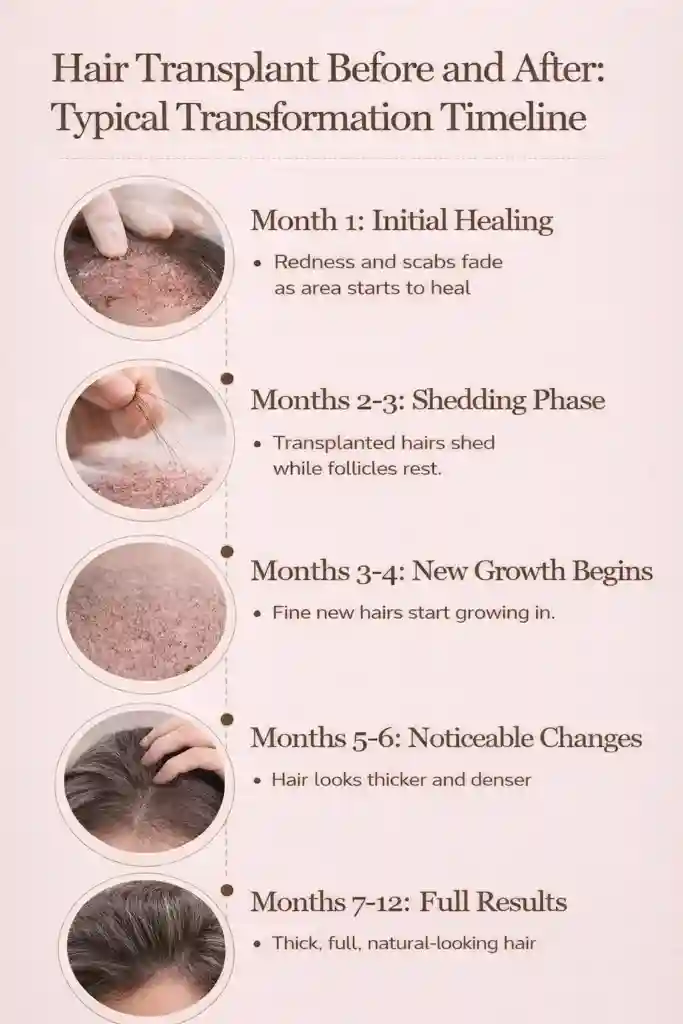
Hair Transplant Before and After: What the Transformation Typically Looks Like
The journey from before to after takes several months. Here is what you can expect at each stage:
Month 1: Initial Healing
- Redness and swelling go away
- Small scabs form and fall off
- The transplanted area starts to heal
Months 2-3: Shedding Phase
- Transplanted hair falls out (this is normal)
- Hair follicles enter a resting phase
- No visible growth yet
Months 3-4: New Growth Begins
- Fine, thin hair starts to appear
- Hair grows about 1 cm per month
- Gradual improvement becomes visible
Months 5-6: Noticeable Changes
- Hair becomes thicker and stronger
- Density improves significantly
- More natural appearance develops
Months 7-12: Full Results
- Hair continues to thicken
- Natural texture returns
- Final appearance takes shape
Most patients see complete results between 10 to 12 months. Some may need up to 18 months for the crown area to fully develop.

How Long Does a Hair Transplant Last?
One of the best things about hair transplants is their lasting nature.
Permanent Hair Growth
Transplanted hair is usually permanent. The follicles come from areas that resist balding and keep this property in new locations. Once they take root, they grow hair for life.
Factors That Influence Longevity
- Quality of donor hair
- Skill of your surgeon
- Your genetics and lifestyle
- How well you care for your hair
While transplanted hair is permanent, it’s important to stop hair fall in your natural hair, which may continue to thin over time. Some people need touch-up procedures like PRP hair treatment years later to maintain fullness and density.
Is There Any Side Effect of Hair Transplant?
Let us address this important question directly. Yes, hair transplants can have side effects. However, most are temporary and mild.
Common Temporary Side Effects
Redness and Swelling
- Appears in the first few days
- Usually goes away within a week
- Can be managed with cold compresses
Scabbing and Crusting
- Forms where hair was transplanted
- Falls off naturally in 7 to 10 days
- Should not be picked or scratched
Itching
- Very common during healing
- Caused by drying and scab formation
- Reduces with proper washing and care
Shock Loss
- Temporary loss of existing hair
- Happens to 2 to 3 weeks after surgery
- Hair grows back within a few months
Less Common Side Effects
Minor Bleeding
- Small amount from donor area
- Stops within a few hours
- Rarely causes concern
Numbness
- Temporary loss of sensation in scalp
- Usually resolves within weeks
- Rarely lasts longer
Infection
- Very rare with proper care
- Can be prevented with hygiene
- Treatable with antibiotics if it occurs
Uneven Growth
- Some areas may grow slower
- Often evens out over time
- May need minor correction
Rare Complications
Cyst Formation
- Small bumps around transplanted areas
- Can be treated easily
- Not dangerous
Poor Graft Survival
- Some follicles may not take root
- Depends on surgeon skill and care
- Usually affects less than 5% of grafts
The good news is that serious complications are extremely rare. Studies show major problems occur in less than 1% of cases.
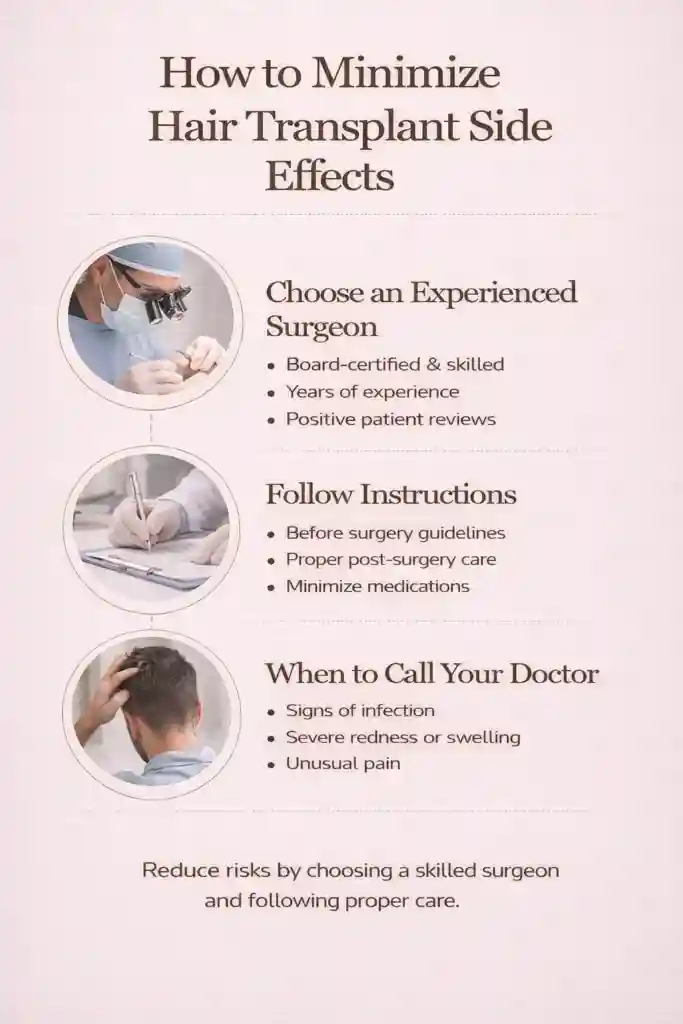
How to Minimize Them Hair Transplant Side Effects
You can reduce the risk of side effects by taking the right steps.
Choose an Experienced Surgeon
This is the most important decision you will make. Look for:
- Board-certified doctors
- Many years of experience
- Good patient reviews
- Clear before and after photos
- Proper consultation process
Follow Pre-Surgery Instructions
Your doctor will give you guidelines before surgery:
- Stop smoking at least 2 weeks before
- Avoid blood-thinning medications
- Do not drink alcohol
- Get enough rest
Follow Post-Surgery Care
Proper hair transplant aftercare is essential for achieving optimal results:
- Sleep with your head elevated
- Avoid touching the transplanted area
- Use prescribed medications as directed
- Wash your hair gently as instructed
- Protect your scalp from sun exposure
- Avoid heavy exercise for 2 weeks
When to Contact Your Doctor
Call your surgeon if you notice:
- Increasing redness that spreads
- Severe pain that does not improve
- Pus or discharge from the area
- High fever
- Signs of infection
Most side effects are normal and expected. However, staying in touch with your doctor helps catch any problems early.
Are Hair Transplants in India Really Safe?
Hair transplant results in India can be excellent. The country offers skilled surgeons, modern technology, and complete care at reasonable costs. Most patients see natural-looking results that last a lifetime.
Side effects do exist, but they are usually mild and temporary. Redness, swelling, and temporary hair shedding are normal parts of healing. Serious complications are rare when you choose an experienced surgeon.
The key to success is doing your research, following all pre and post-surgery instructions carefully, and being patient with hair growth. Every person is different, so your results depend on your unique situation.
The best step is to consult with a certified hair transplant professional. They can assess your hair loss, explain your options, and create a plan that works for you. With proper care and realistic expectations, a hair transplant can give you the confidence and appearance you desire.
Stop Worrying About Hair Loss. Start Your Transformation Today.
Are thinning hair and bald patches affecting your confidence? You deserve a permanent solution. Our experienced dermatologists and hair transplant surgeons at Reborn Skin & Hair Clinic have helped thousands restore their hair with natural-looking results.
Find Us at Multiple Locations Across India
Pune: Baner Clinic | Karve Road Clinic | Koregaon Park Clinic
Hyderabad: Kukatpally Clinic | Banjara Hills Clinic
Mumbai: Andheri Clinic
Jaipur: Bapu Nagar Clinic
Goa: North Goa Clinic
FAQs
Hair transplants in India have a success rate of 90–95% when performed by experienced surgeons. Results depend on technique, donor quality, and proper aftercare.
Transplanted hair usually lasts a lifetime, but natural hair around it may continue to thin. With good donor selection and proper care, results can remain stable even after 20 years.
A hair transplant is generally safe, but no procedure is 100% risk-free. Minor side effects like swelling, redness, or temporary shedding may occur and usually resolve quickly.
Possible negatives include temporary swelling, scabbing, itching, or shock loss. Rarely, infection or uneven growth can happen if the procedure isn’t done by a skilled surgeon.
People with stable hair loss, sufficient donor hair, and good scalp health make ideal candidates. A consultation is essential to assess medical history and long-term suitability.
The best age is usually 25 years and above, when hair loss patterns are more predictable. Younger individuals may still qualify depending on their diagnosis and stability of hair fall.
Use medicated shampoos, avoid harsh products, and keep the scalp hydrated. Treating dandruff consistently helps reduce hair fall over time.