


What Is Oily Dandruff?
Dealing with flakes on your shoulders even after washing your hair regularly? Does your scalp feel greasy and itchy at the same time? You might be dealing with oily dandruff, one of the most common scalp concerns that affects people across all age groups.
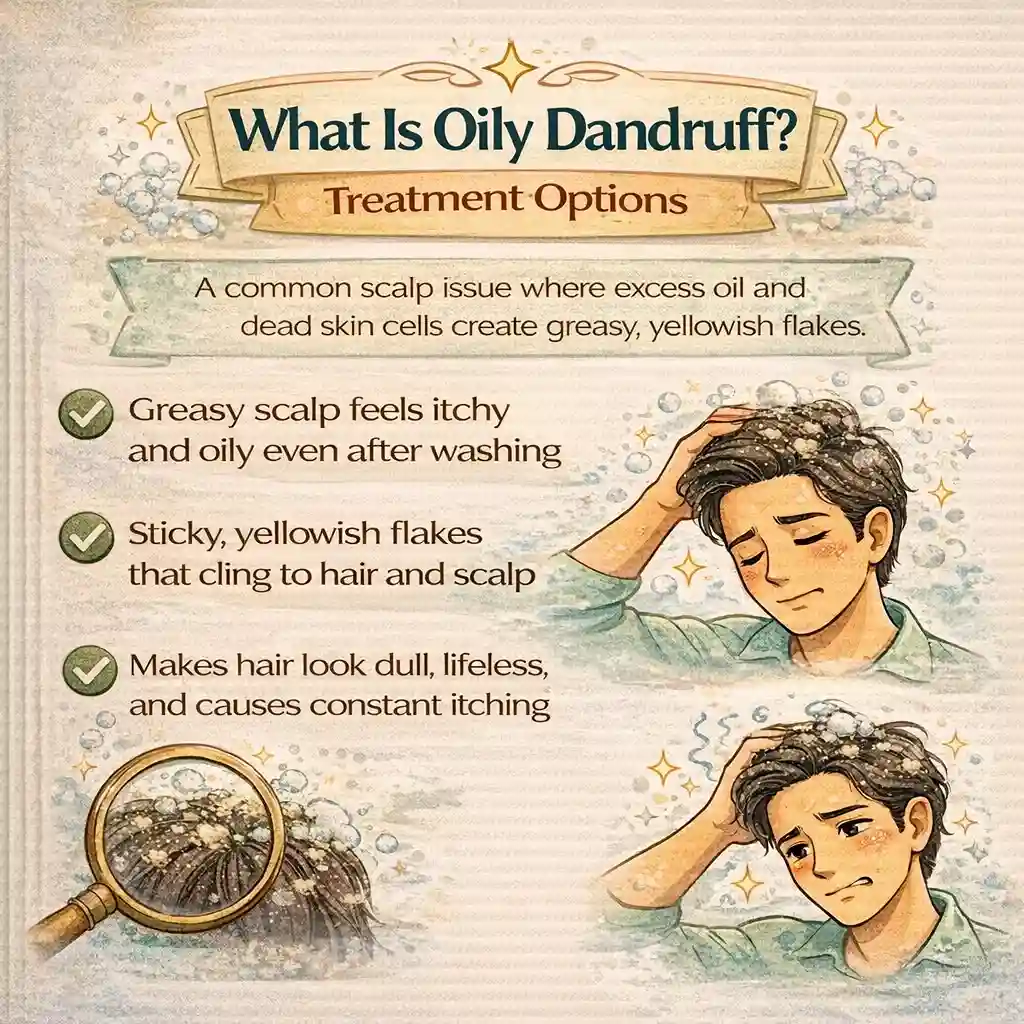
Oily dandruff is a scalp condition where your skin sheds dead cells faster than normal. These cells mix with natural oils on your scalp and form sticky, yellowish flakes. Unlike dry dandruff that creates small white flakes, oily dandruff produces larger, greasy flakes that stick to your hair.
Our Nearest Skin and Hair Clinic in India
Choose Your City
Choose Your Location
Our Clinic Near You
is Located in Andheri West
is Located in Porvorim
is Located in Bapu Nagar
is Located in Kukatpally
is Located in Banjara Hills
is Located in Baner
is Located in Karve Road
is Located in Koregaon Park
Oily dandruff is not just about those embarrassing white flakes on your clothes. It can make your hair look dull and lifeless, cause constant itching, and affect your confidence in social situations. Studies show that around 50% of adults face dandruff at some point in their lives, making it a widespread issue.
The challenge with oily dandruff is that it needs special attention. Unlike regular dry dandruff, oily dandruff forms sticky, yellowish flakes that cling to your hair and scalp. Many people try regular anti-dandruff solutions but see little improvement because they are not addressing the root cause.
The good news is that oily dandruff is manageable. With the right understanding of what causes it and proper treatment methods, you can control this condition and restore your scalp health. This guide will walk you through everything you need to know about oily dandruff and how to get rid of it effectively.
Difference Between Oily and Dry Dandruff
- Oily dandruff: Creates large, yellow flakes that feel greasy. Your scalp looks shiny and oily.
- Dry dandruff: Produces small, white flakes that fall off easily. Your scalp feels tight.
The main difference is how much oil your scalp makes. Too much oil creates the perfect environment for oily dandruff.
Oily Scalp Dandruff: Why It Happens
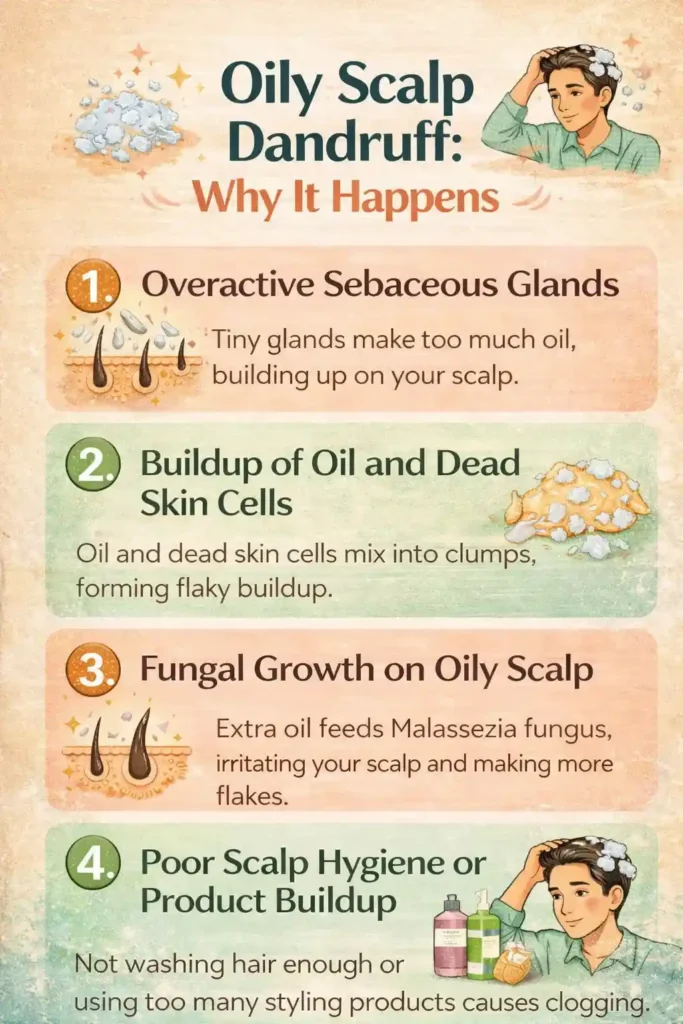
1. Overactive Sebaceous Glands
Your scalp has tiny glands that make sebum, a natural oil. Sometimes these glands produce too much oil, which builds up and attracts dead skin cells.
2. Buildup of Oil and Dead Skin Cells
When oil and dead skin cells mix, they form clumps that turn into the flakes you see.
3. Fungal Growth on Oily Scalp
A fungus called Malassezia lives on everyone’s scalp and feeds on oil. Extra oil makes the fungus grow faster, irritating your scalp and creating more flakes.
4. Poor Scalp Hygiene or Product Buildup
Not washing your hair enough or using too many styling products causes buildup that blocks scalp pores.
How to Get Rid of Oily Dandruff
Getting rid of oily dandruff takes the right approach.
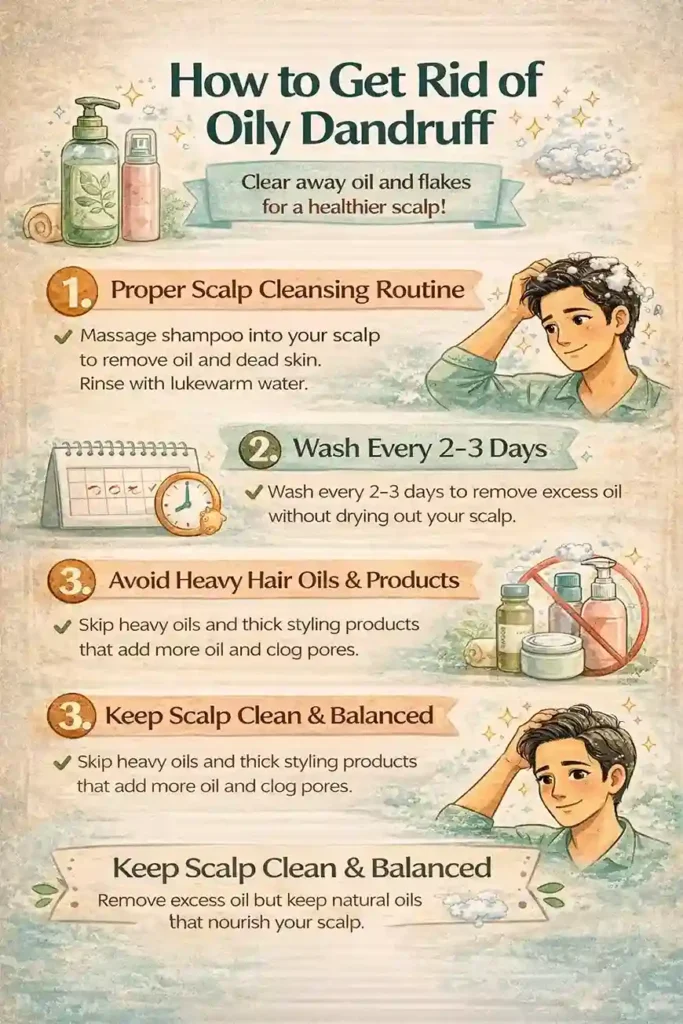
1. Proper Scalp Cleansing Routine
Focus on your scalp when shampooing. Gently massage shampoo into your scalp using your fingertips to remove oil and dead cells. Rinse well with lukewarm water.
2. Washing Frequency for Oily Scalp Dandruff
For oily scalp dandruff, wash every 2 to 3 days. This removes excess oil without drying your scalp.
Avoiding Heavy Hair Oils and Styling Products
Skip heavy oils if you have oily dandruff. Adding more oil feeds the fungus and makes flakes worse. Avoid thick styling products.
3. Importance of Keeping the Scalp Clean and Balanced
Your goal is balance. Remove excess oil but keep your scalp healthy.

Oily Dandruff Treatment Options
Several treatments can help control oily dandruff.
Medicated Anti-Dandruff Shampoos for Oily Scalp
Special shampoos target the causes of oily dandruff. Look for products made for oily or normal hair.
Ingredients That Help Control Oily Dandruff
When choosing a shampoo, check for these helpful ingredients:
- Zinc pyrithione: Fights fungus and bacteria
- Salicylic acid: Removes dead skin cells and unclogs pores. Learn more about salicylic acid benefits for scalp health.
- Ketoconazole: Stops fungus growth
- Coal tar: Slows down skin cell shedding
- Tea tree oil: Natural anti-fungal properties
How Long Oily Dandruff Treatment Usually Takes
Most people see improvement in 2 to 4 weeks with regular use. For best results, stick with your routine for 6 to 8 weeks.
Consistency and Correct Usage
Be consistent. Use your treatment shampoo 2 to 3 times per week. Apply to wet hair, massage into the scalp, and leave on for 3 to 5 minutes before rinsing.
Best Hair Care Practices for Oily Scalp Dandruff
1. Choosing the Right Shampoo for Oily Dandruff
Choose products designed for oily scalps. Avoid heavy moisturizers.
2. Avoiding Overwashing and Harsh Products
Washing too often or using strong shampoos can make your scalp produce more oil, worsening the problem.
3. Scalp Exfoliation Basics
Light exfoliation once a week helps. Use a gentle scalp scrub or soft brush while shampooing. Do not scrub too hard.
4. Maintaining Scalp Hygiene
Rinse hair well after swimming or exercising. Change pillowcases regularly and clean combs and brushes often.
How to Prevent Oily Dandruff from Coming Back
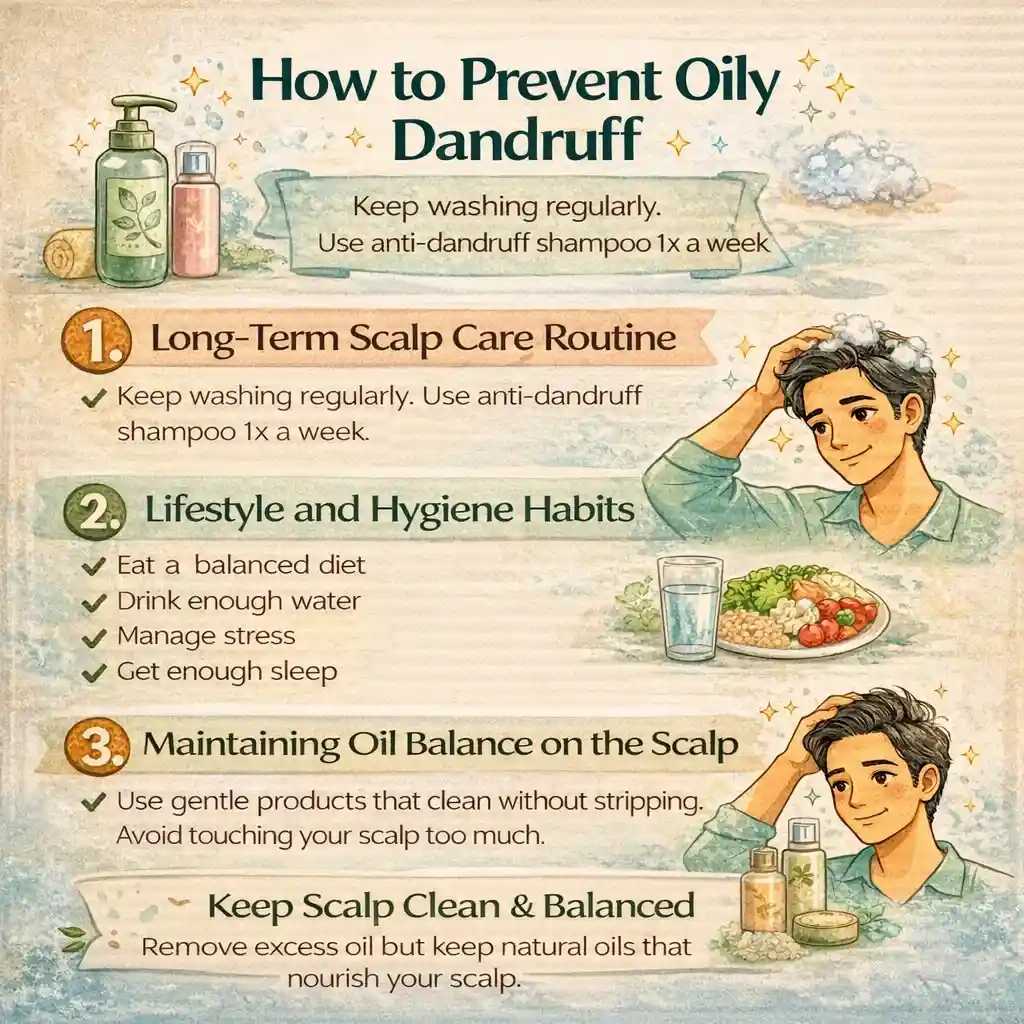
1. Long-Term Scalp Care Routine
Stick to regular hair washing. Use anti-dandruff shampoo at least once a week even after flakes are gone.
2. Lifestyle and Hygiene Habits
- Eat a balanced diet
- Drink enough water
- Manage stress
- Get enough sleep
- Limit sugar and unhealthy fats
3. Maintaining Oil Balance on the Scalp
The goal is balance, not removing all oil. Use gentle products that clean without stripping. Avoid touching your scalp too much.
How to Get Rid of Oily Dandruff Effectively
Oily dandruff happens when your scalp makes too much oil, creating a home for fungus to grow. You can control it by washing regularly with the right shampoo, avoiding heavy products, and keeping your scalp clean.
Treating oily dandruff takes time. Most people see results within a few weeks. Use medicated shampoos 2 to 3 times per week and maintain good scalp hygiene.
If your dandruff does not improve after 8 weeks, or if you notice severe itching or experience dandruff and hair loss, see a doctor. They can prescribe stronger treatments if needed.
With the right care, you can get rid of oily dandruff and enjoy a healthy scalp.
Struggling with oily dandruff that keeps coming back?
If you have been struggling with oily dandruff and home treatments are not giving you results, it might be time to seek specialized hair care from a professional. At Reborn Skin & Hair Clinics, our experienced doctors offer professional dandruff treatment with personalized plans for oily scalp conditions.
Visit Us at Our Convenient Locations
Pune: Baner Clinic | Karve Road Clinic | Koregaon Park Clinic
Hyderabad: Kukatpally Clinic | Banjara Hills Clinic
Mumbai: Andheri Clinic
Jaipur: Bapu Nagar Clinic
Goa: North Goa Clinic
FAQs
To get rid of oily dandruff fast, use a medicated anti-dandruff shampoo that controls excess oil and fungal growth. Wash your scalp regularly, avoid heavy hair oils, and keep the scalp clean to reduce flakes quickly.
Oily dandruff is caused by excess sebum production on the scalp, which mixes with dead skin cells. This oily environment encourages fungal growth, leading to itching and flaky buildup.
Fixing oily skin dandruff requires regular cleansing with the right shampoo to control oil and remove buildup. Maintaining proper scalp hygiene and avoiding greasy products helps restore scalp balance.
Oily dandruff can be effectively controlled with consistent treatment and proper scalp care. While it may recur, following the right routine helps keep oily dandruff under long-term control.
Dandruff can be completely eliminated when the root cause is treated properly. For oily dandruff, regular use of targeted treatments and maintaining scalp hygiene are key to preventing recurrence.
Yes, oily dandruff is often linked to fungal overgrowth on the scalp. The fungus thrives on excess oil, which triggers inflammation, itching, and visible flakes.