
The Truth About Puffy Eyes Nobody Talks About
Puffy eyes do not always mean you cried. They do not always mean you had a bad night either.
Sometimes you sleep 8 hours, eat well, and still wake up with swollen eyes. That is frustrating. And that is exactly why so many people try remedy after remedy without getting real results. They are treating the symptom, not the cause.
Dermatologists point out one thing that most people miss. The skin around the eyes is the thinnest on the entire face. Even a small change in your body, a little extra salt, one restless night, or a mild allergy, shows up there first. Before anywhere else.
So if you have been splashing cold water and hoping for the best, this blog is for you.
This blog covers the real causes of puffy eyes, simple eye care tips that actually work, lifestyle changes that make a difference over time, and professional treatments for cases that need more than home remedies.
If you are facing a skin concern, contact our treatment clinic near you |
|
| Pune | Baner |
| Karve Road | |
| Koregaon Park | |
| Hyderabad | Kukatpally |
| Banjara Hills | |
| Jaipur | Bapu Nagar |
| Goa | Porvorim |
| Mumbai | Andheri West |
If you are facing a skin concern, contact our treatment clinic near you
What Causes Puffy Eyes?
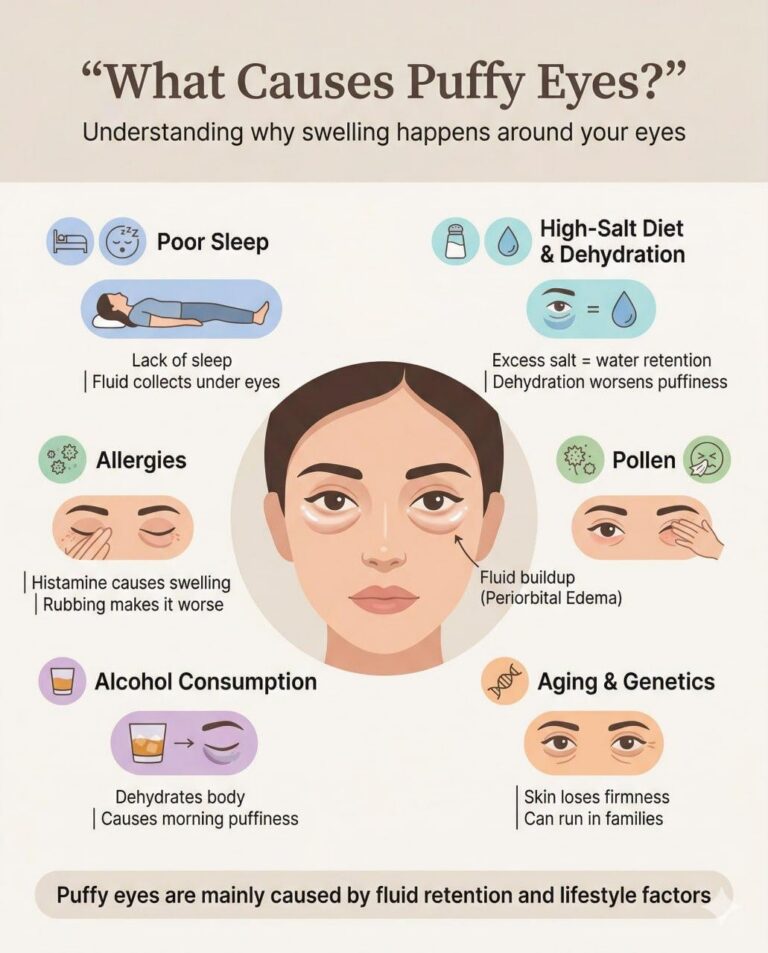
Before you can reduce puffy eyes, it helps to understand why they happen. Puffy eyes occur when fluid builds up in the soft tissue around the eyes. This is also called periorbital edema. Several factors can cause this:
1. Poor Sleep or Sleeping Flat
When you do not get enough sleep, your body tends to retain fluid, which can collect around the eyes. Sleeping flat without any pillow support also allows fluid to settle under the eyes overnight.
2. High-Salt Diet and Dehydration
Eating too much salt causes your body to hold on to water. This extra water often shows up as puffiness around the eyes. At the same time, when your body is dehydrated, it tries to retain as much water as possible, which can also cause swelling.
3. Allergies
Seasonal or dust allergies cause the body to release a chemical called histamine. This triggers inflammation and fluid retention, making the area around the eyes swell up. Rubbing your eyes due to irritation can make this worse.
4. Alcohol Consumption
Alcohol dehydrates the body. When your body is dehydrated, it tends to store water in places like under the eyes. Drinking alcohol, especially at night, can lead to noticeably puffy eyes the next morning.
5. Aging and Genetics
As we get older, the skin around the eyes becomes thinner and loses its firmness. The muscles supporting the eyelids also weaken over time, which leads to sagging and puffiness. In some cases, puffy eyes simply run in the family.
Eye Care Tips to Reduce Puffy Eyes
If you wake up with swollen eyes, these simple eye care tips can help reduce puffiness quickly. Most of them use things you already have at home.
- Cold Compress: Place something cold on your closed eyes for 10 to 15 minutes. You can use a clean cloth soaked in cold water, a bag of ice wrapped in a towel, or chilled spoons. Cold temperatures help narrow the blood vessels and reduce swelling fast.
- Chilled Tea Bags: Soak two tea bags in water, let them cool in the fridge, and then place them on your eyes for 15 to 30 minutes. The caffeine in tea helps tighten blood vessels and reduces the appearance of puffiness. Green or black tea works best.
- Cucumber Slices: Cut a refrigerated cucumber into thick slices and place them on your eyes for 20 to 30 minutes. Cucumbers have a high water content and natural cooling properties that help soothe swollen eyes and reduce puffiness.
- Elevate Your Head While Sleeping: Use an extra pillow or slightly raise the head of your bed. This simple change stops fluid from pooling around your eyes while you sleep, so you wake up looking less puffy.
- Caffeine-Based Eye Creams: There are many eye creams and serums available that contain caffeine as a key ingredient. These products, when applied regularly, help constrict the blood vessels under the eyes and reduce long-term puffiness.
Lifestyle Changes for Puffy Eyes
Quick fixes can help on a busy morning, but the best way to reduce puffy eyes over time is to make a few changes in your daily routine. These lifestyle changes for puffy eyes are simple and easy to follow:
- Reduce Salt Intake: Cut back on salty snacks, processed foods, and packaged meals. A low-salt diet reduces fluid retention throughout the body, including around the eyes. Add potassium-rich foods like bananas and leafy greens to help remove extra water from the body.
- Stay Hydrated: Drink at least 8 glasses of water each day. When your body gets enough water, it stops holding on to excess fluid. However, avoid drinking too much water right before going to bed as this can worsen overnight puffiness.
- Get 7 to 9 Hours of Sleep: Sleep is when your skin repairs itself. Not getting enough rest is one of the most common causes of puffy eyes. Set a regular bedtime and stick to it. Good quality sleep is one of the most effective lifestyle changes you can make for eye health.
- Limit Alcohol, Especially Before Bed: Alcohol disturbs sleep quality and dehydrates the body. Both of these effects contribute to puffy eyes in the morning. If you do drink occasionally, balance it out with extra water intake.
- Manage Allergies: If your puffiness is linked to allergies, speak with a doctor about the right allergy medication or eye drops. Avoiding known triggers like dust, pollen, or pet fur can also go a long way in preventing swelling around the eyes.
Professional Treatments for Puffy Eyes
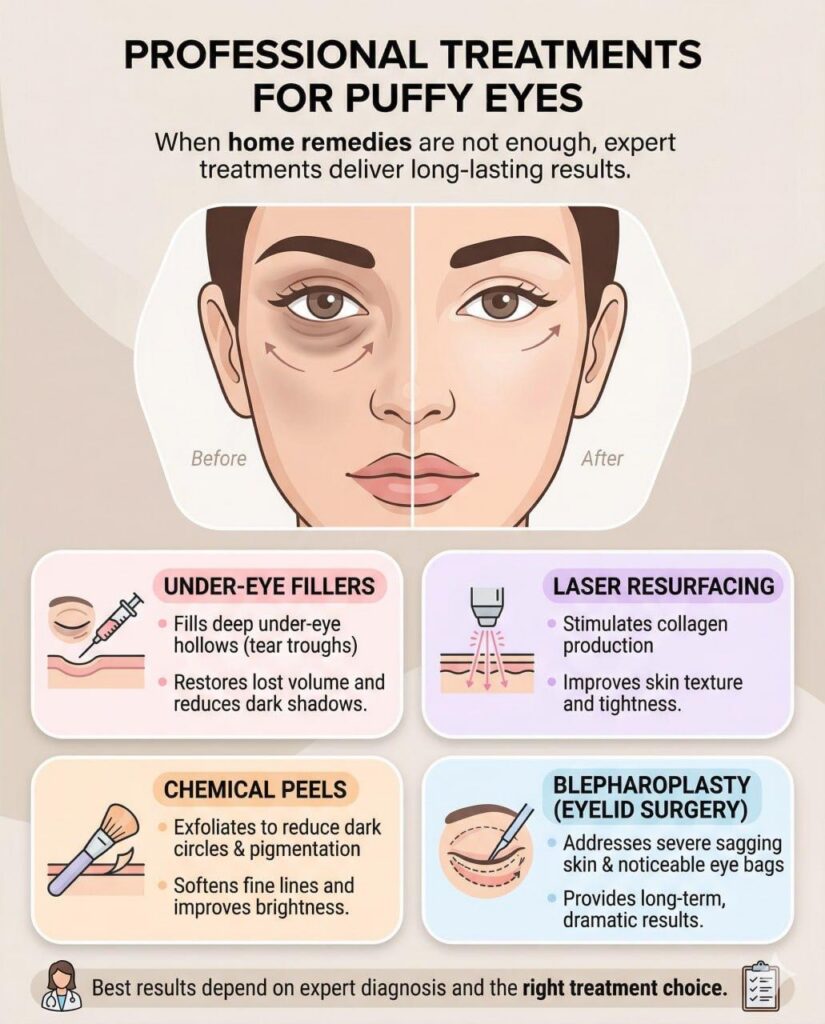
Sometimes, home remedies and lifestyle changes are not enough. If your puffiness is persistent or linked to aging, a skin specialist can recommend puffy eyes treatment options that are safe and effective when done by a qualified doctor.
1. Under-Eye Fillers
A doctor injects a gel-like substance (usually hyaluronic acid) into the hollow area under the eyes, this is commonly known as dermal fillers treatment. This fills in the gap between the lower eyelid and the cheek, creating a smoother look. The results can last from six months to one year.
2. Laser Resurfacing
A laser is used to remove the top layer of skin around the eyes. Laser resurfacing treatment encourages new collagen growth, resulting in firmer and smoother skin. It is a good option for those dealing with both wrinkles and puffiness due to aging.
3. Chemical Peels
Chemical peels use a mild acid solution to remove the outer layer of skin. This improves skin texture, tightens the under-eye area, and can help reduce the look of puffiness and dark circles under eyes around the eyes. It is usually done as an outpatient procedure.
4. Blepharoplasty (Eyelid Surgery)
This is a surgical option for those with severe or permanent eye bags. During blepharoplasty eyelid surgery, the surgeon removes or repositions the excess fat and tightens the skin around the lower eyelid. It provides long-lasting results and is usually considered when other treatments have not worked. Always consult a board-certified surgeon before going ahead with this option.
When Should You See a Doctor?
Puffy eyes usually go away on their own within a few hours. However, you should see a doctor if:
- The swelling does not go away after a full day or two.
- Only one eye is swollen.
- The swelling comes with pain, redness, or a hot sensation.
- You notice any changes in your vision.
Small Changes, Big Results for Puffy Eyes
Puffy eyes can be uncomfortable and affect how you feel about yourself. But in most cases, they are very much manageable.
Starting with simple eye care tips like cold compresses and chilled tea bags, making key lifestyle changes such as better sleep and less salt, and knowing when to visit a professional can all help you reduce puffy eyes effectively.
The key is to be consistent. Small daily habits make a big difference over time. If your puffiness continues even after trying home remedies and lifestyle changes, do not hesitate to talk to a doctor. A skin specialist or eye care professional can guide you toward the right treatment based on your specific needs.
FAQs
A cold compress or chilled tea bags placed on the eyes for 10 to 15 minutes can reduce puffiness quickly. Cold temperatures help narrow the blood vessels and bring down the swelling fast.
Puffy eyes are mostly caused by fluid buildup around the eyes. Poor sleep, a high-salt diet, allergies, alcohol, and aging are the most common reasons behind it.
In most cases, yes. Puffy eyes caused by poor sleep, diet, or allergies usually go away on their own within a few hours. However, eye bags linked to aging or genetics may need professional treatment to improve.
Water is the best drink for puffy eyes. Staying well hydrated helps flush out excess fluid from the body. Green tea is also helpful as it contains antioxidants that reduce inflammation around the eyes.
A lack of Vitamin K, Vitamin C, and iron can contribute to puffiness and dark circles causes around the eyes, as these nutrients support healthy blood circulation and skin strength.
Mild puffiness usually goes down within a few hours to a full day. If the puffiness is linked to allergies or a medical condition, it may take longer and may need proper treatment to fully settle.