
Understanding Pregnancy Stretch Marks
Pregnancy is a beautiful journey, but it often brings pregnancy skin problems that affect your confidence. Among these, stretch marks are the most common concern for new mothers.
Stretch marks are thin lines that develop when skin stretches rapidly. The medical term is striae gravidarum. These are tiny scars that form in the middle skin layer called the dermis.
When your belly grows during pregnancy, skin must stretch quickly. If it stretches faster than it can adjust, the collagen and elastin fibers tear, creating visible lines.
Stretch marks are not a sign of poor health. They are natural for most pregnant women. While they cannot be removed completely, they can fade significantly with proper care and realistic expectations.
Nearly 90% of pregnant women develop stretch marks during or after pregnancy. These marks appear when your skin stretches quickly to make room for your growing baby. While completely natural and harmless, many women seek ways to reduce their appearance.
The good news is that stretch marks can fade with time and proper care. This guide explains what causes them, when they appear, and proven methods to remove or reduce them naturally and through professional treatments.

Pregnancy Stretch Mark Causes
Several factors work together to cause stretch marks during pregnancy. Understanding these causes can help you take better preventive steps.
- Rapid stretching of the skin during pregnancy: As your baby grows, your belly expands quickly. This rapid growth puts stress on your skin and can cause the elastic fibers to break.
- Hormonal shifts affecting collagen and elastin: During pregnancy, your body produces more cortisol, a hormone that can weaken the elastic fibers in your skin. This makes your skin more likely to tear when stretched.
- Genetic predisposition and skin type: If your mother or sisters had stretch marks during pregnancy, you are more likely to get them too. Your genes determine how much collagen your skin has and how flexible it is.
- Areas commonly affected: Stretch marks most often appear on the belly, thighs, breasts, and hips. These are the areas where your body stores the most fat and experiences the most stretching during pregnancy.

Stretch Marks During Pregnancy: When They Appear and What They Look Like
Most women notice stretch marks during the second or third trimester, around the sixth or seventh month. However, timing varies. Some see them earlier while others develop them after delivery.
Fresh stretch marks appear red, pink, or purple due to increased blood vessels and swelling. You may feel itching around these marks.
Over months after delivery, marks fade to white, silver, or lighter than your skin tone. They may feel slightly depressed. Severity depends on weight gain speed, skin type, age, and whether you carry multiples.
How to Remove Pregnancy Stretch Marks at Home
Home remedies can help reduce the appearance of stretch marks when used consistently. While they cannot remove marks completely, they can make them less noticeable over time.
- Consistent moisturizing: Apply natural moisturizers like cocoa butter, shea butter, or coconut oil twice daily to keep your skin hydrated. Well-hydrated skin is more elastic and heals better. Massage these oils gently into the affected areas using circular motions.
- Gentle exfoliation to support skin renewal: Exfoliate your skin once or twice a week using a gentle scrub. This removes dead skin cells and helps new, healthy skin grow. Be gentle to avoid irritating the skin.
- Hydration and nutrition benefits: Drink at least 8 to 10 glasses of water daily to keep your skin soft and elastic. Eat foods rich in vitamins C, E, and A, along with zinc and protein. These nutrients help your body produce collagen, which repairs skin damage.
- Safe massage techniques to improve skin elasticity: Regular massage improves blood flow to the skin and helps break down scar tissue. Use gentle pressure and massage in circular motions for 5 to 10 minutes daily.

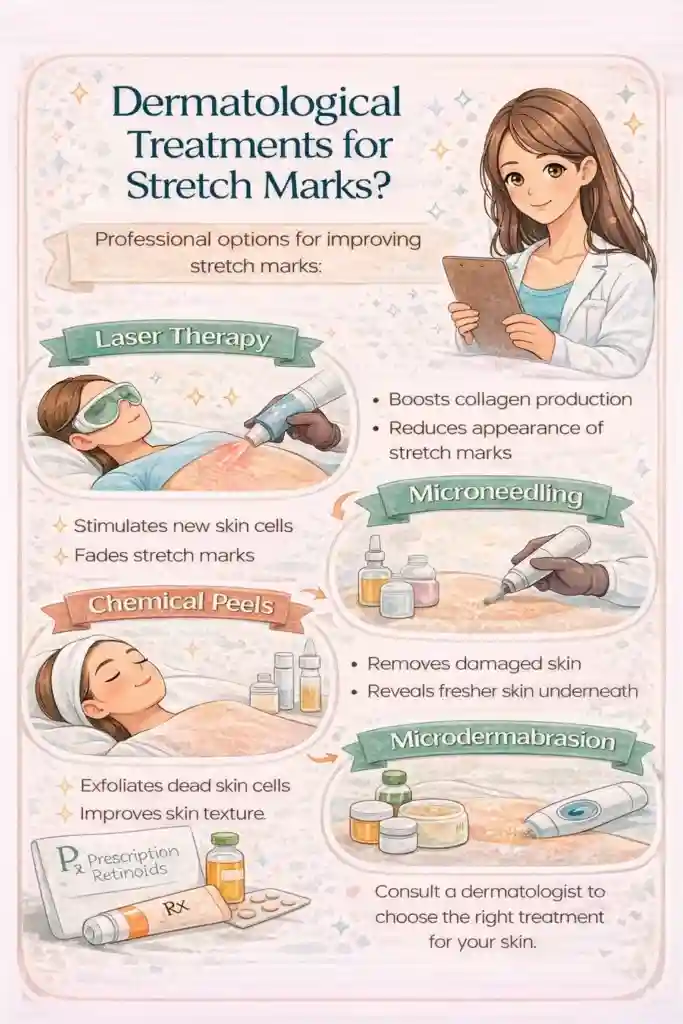
Dermatological Treatments for Stretch Marks
If home remedies do not give you the results you want, professional stretch marks removal treatment can offer more effective improvements. It is best to consult a dermatologist to find the right treatment for your skin type.
When to consider professional treatments: If your stretch marks are still red or purple, they respond better to treatment. Older white or silver marks are harder to treat but can still be improved with the right approach.
Overview of effective options:
- Laser therapy: This is one of the most effective treatments. Different types of lasers are used depending on your skin color and the age of the marks. Laser therapy helps increase collagen production and improves skin texture. You may need 3 to 5 sessions to see visible results.
- Microneedling treatment: This procedure uses tiny needles to create small wounds in the skin. This triggers your body to produce more collagen and new skin cells, which helps reduce the appearance of stretch marks.
- Chemical peels treatment: A chemical solution is applied to remove the top layers of damaged skin. This reveals fresher, smoother skin underneath. Multiple sessions may be needed for best results.
- Microdermabrasion: This treatment gently removes dead skin cells from the surface. Understanding microdermabrasion benefits can help you decide if this treatment suits your skin needs.
- Prescription retinoids: These vitamin A creams can help rebuild collagen in the skin. However, they should only be used after pregnancy and not while breastfeeding unless your doctor approves. Always check with your healthcare provider before using any prescription treatment.
Prevention Tips to Reduce Stretch Marks During Pregnancy
While you cannot completely prevent stretch marks, you can reduce your chances of getting them by taking care of your skin from early pregnancy.
- Maintaining gradual, healthy weight gain: Gaining weight too quickly increases your risk of stretch marks. Work with your doctor to gain weight at a steady, healthy pace throughout your pregnancy.
- Regular moisturization from early pregnancy: Start applying moisturizers to your belly, breasts, hips, and thighs from the first trimester. This keeps your skin supple and more able to stretch without tearing.
- Supporting skin elasticity through diet and hydration: Eat a balanced diet rich in vitamins and minerals. Stay well-hydrated by drinking plenty of water throughout the day. Good nutrition supports your skin’s natural healing and stretching abilities.
Can Pregnancy Stretch Marks Be Fully Removed?
Stretch marks are scars and cannot be removed completely. However, with the right approach to remove stretch marks permanently, they can be reduced significantly.
With good home care like moisturizing, proper nutrition, and hydration, marks fade naturally. Most women find marks become much lighter within a year after delivery.
Professional skin rejuvenation treatment options enhance results further. Combining laser therapy or microneedling with home care gives the best outcomes by stimulating collagen and improving skin texture.
Success requires consistency. Stick with your routine for several months to see visible improvement. Remember, your body has done something amazing. While working on reducing marks, celebrate the strength and journey of motherhood.

Get Expert Help for Your Pregnancy Stretch Marks Today
If you are struggling with stretch marks after pregnancy and want professional help, Reborn Skin & Hair Clinics is here for you.
Our experienced dermatologists understand the unique challenges that new mothers face and offer personalized treatment plans designed just for your skin type and needs.
Visit Reborn Skin & Hair Clinics and discover how we can help you achieve your skin goals.
Find Us at Multiple Locations Across India
Pune: Baner Clinic | Karve Road Clinic | Koregaon Park Clinic
Hyderabad: Kukatpally Clinic | Banjara Hills Clinic
Mumbai: Andheri Clinic
Jaipur: Bapu Nagar Clinic
Goa: North Goa Clinic
FAQs
FUT is generally cheaper than FUE because it requires less time and fewer individual graft extractions. FUE costs more due to its detailed, graft-by-graft harvesting method.
In India, 3,000 FUE grafts usually cost between ₹70,000 to ₹1,50,000, depending on the clinic, surgeon experience, and technology used.
Both are effective, but FUE is preferred for its minimally invasive approach and no visible linear scar. FUT can be better for large graft numbers or thicker density at a lower cost.
Yes, FUT is typically slightly more painful because it involves removing a strip of skin. FUE is less invasive, leading to faster healing and reduced post-procedure discomfort.
FUT results are permanent because transplanted grafts are taken from the genetically resistant donor area. Following hair transplant dos and don'ts ensures the results last a lifetime.
FUE has a low failure rate of around 2–5%, mainly depending on surgical expertise and post-care. Skilled surgeons usually achieve high graft survival rates.
Our clinics are located in following cities only, to visit our nearest clinic, contact us |
|
| Pune | Baner |
| Karve Road | |
| Koregaon Park | |
| Hyderabad | Kukatpally |
| Banjara Hills | |
| Jaipur | Bapu Nagar |
| Goa | Porvorim |
| Mumbai | Andheri West |