Healthy Hair Starts with a Smart Diet Chart
We often blame genetics, stress, or pollution for our hair problems, but one of the most overlooked causes of weak, dull, or thinning hair is poor nutrition.
Just like your skin and body, your hair reflects what you eat. The nutrients you consume directly affect the strength of your hair follicles, the speed of hair growth, and even how shiny your strands look.
While shampoos, serums, and treatments can improve your hair’s appearance temporarily, true and lasting hair health begins from within. A diet that lacks essential vitamins, proteins, and minerals can lead to excessive hair fall, slow regrowth, and even premature greying.
According to dermatologists and trichologists, nearly 70–80% of hair issues are linked to nutritional deficiencies – especially in proteins, iron, zinc, biotin, and vitamin D.
Studies have shown that people who follow a balanced, nutrient-rich diet experience visibly thicker and stronger hair compared to those relying solely on topical products.
So, if you’ve tried every hair care product and still struggle with hair fall or slow growth, it’s time to look at what’s on your plate.
In this blog, we’ll share the best diet chart for hair growth, along with the key foods and nutrients your hair needs daily to grow longer, thicker, and healthier naturally.

Understanding the Role of Nutrition in Hair Growth
Your hair is one of the fastest-growing tissues in the body – but it needs the right fuel to thrive. Every strand is made up of a protein called keratin, and its growth depends heavily on the nutrients you consume daily.
When your diet is rich in vitamins, minerals, and proteins, it helps your hair grow stronger, thicker, and healthier from the roots.
The hair growth cycle has three stages – growth (anagen), rest (telogen), and shedding (catagen). For this cycle to function properly, your body needs a constant supply of nutrients like iron, zinc, biotin, vitamin D, and protein.
A deficiency in any of these can disrupt the cycle, leading to hair thinning, breakage, and excessive shedding.
Common signs that your hair isn’t getting enough nutrients include:
- Increased hair fall or slow regrowth
- Dull, brittle, or dry hair
- Reduced hair density or volume
- Flaky scalp or dandruff due to lack of essential fats
Dermatologists often emphasize that an unbalanced diet – high in processed food and low in essential nutrients – can be one of the biggest hidden causes of hair loss.
This is where a well-structured hair loss diet or a diet chart for hair growth comes in. By supplying your scalp and follicles with the right mix of vitamins, minerals, and proteins, you create the perfect internal environment for stronger, faster hair growth.
Daily Diet Chart for Hair Growth
A balanced diet plays a crucial role in maintaining healthy hair. Consistent intake of essential nutrients such as protein, vitamins, minerals, and healthy fats supports stronger roots, reduces breakage, and promotes natural hair growth.
Below is a simple, dermatologist-recommended daily diet chart for hair growth that you can easily follow.
Morning
- Start your day with warm water and lemon juice to aid detoxification and improve metabolism.
- Alternatively, aloe vera juice is an excellent choice for promoting scalp health and reducing inflammation.
- Include a handful of dry fruits such as almonds, walnuts, and dates — these are rich in omega-3 fatty acids, iron, and biotin, which strengthen hair strands and reduce hair fall.
Breakfast
- Choose a nutrient-dense breakfast that combines complex carbohydrates, fiber, and protein.
- Options include oats or a smoothie made with banana, spinach, and flax seeds.
- Add a protein source such as eggs, sprouts, paneer, or soy milk, since protein is vital for keratin production – the structural protein of hair.
Mid-Morning Snack
- Keep your energy levels stable with coconut water or a fresh fruit bowl.
- Include zinc-rich foods like pumpkin seeds or sunflower seeds, as zinc supports tissue repair and maintains healthy oil glands around hair follicles.
Lunch
- Opt for a balanced, wholesome meal consisting of brown rice or quinoa paired with dal, beans, or lentils for a steady source of plant-based protein.
- Add a colorful vegetable salad with spinach, carrots, and beetroot to supply antioxidants, iron, and beta-carotene – all essential for preventing hair thinning and dullness.
Evening Snack
- Choose a light, nutrient-rich snack such as green tea with roasted chickpeas or makhana.
- Green tea contains antioxidants that help minimize hair follicle damage, while chickpeas provide protein and fiber.
Dinner
- Have a light but protein-rich dinner to support overnight repair and hair regeneration.
- Include options like grilled tofu, lentil soup, or chicken breast served with steamed or sautéed vegetables such as broccoli, beans, or bell peppers.
Before Bed
- End your day with a glass of milk or herbal tea, along with a few soaked almonds.
- These provide biotin and vitamin E, which nourish the scalp and improve hair texture.
Following this daily diet chart for hair growth ensures your body receives a steady supply of nutrients essential for healthy hair. Consistency and balance are key – when your diet is right, your hair naturally becomes stronger, thicker, and more resilient.
Vegetarian Food for Hair Growth
A vegetarian diet can provide all the essential nutrients needed for healthy hair growth when planned correctly. Many plant-based foods are rich in proteins, vitamins, minerals, and healthy fats that strengthen the hair from root to tip.
The key lies in choosing the right combination of ingredients to meet your body’s daily nutritional requirements.
Protein-Rich Vegetarian Foods
Protein is the foundation of healthy hair, as it supports the production of keratin, the primary structural component of hair. Vegetarians can include:
- Lentils and chickpeas: Excellent sources of plant-based protein and iron.
- Soybeans and tofu: High in protein and amino acids that aid in hair repair and growth.
- Paneer: A rich source of calcium and protein for stronger hair strands.
- Quinoa: A complete protein containing all nine essential amino acids that nourish hair follicles.
Iron and Biotin Sources
Iron helps carry oxygen to the hair roots, while biotin improves hair strength and prevents brittleness. Include:
- Spinach and broccoli: Packed with iron, folate, and vitamin C to support scalp circulation.
- Amla: High in vitamin C, which boosts collagen and strengthens hair roots.
- Sweet potatoes: Provide beta-carotene, which converts to vitamin A for improved scalp health.
Omega-3 and Zinc-Rich Foods
Healthy fats and minerals play a major role in scalp nourishment and hair density.
- Chia seeds and flax seeds: Rich in omega-3 fatty acids that keep hair hydrated and shiny.
- Walnuts: Contain biotin, vitamin E, and zinc, all crucial for stronger, breakage-resistant hair.
- Pumpkin seeds: A good vegetarian source of zinc, which supports tissue repair and prevents hair thinning.
Incorporating these vegetarian foods for hair growth into your daily meals helps ensure a steady supply of nutrients essential for hair health. With balanced intake and proper hydration, you can maintain stronger, thicker, and more resilient hair.
Vitamins and Minerals for Hair Growth
Essential vitamins and minerals for hair growth play a vital role in maintaining healthy, strong strands. Vitamin A supports scalp moisture, biotin (Vitamin B7) strengthens roots, and Vitamin C boosts collagen for improved hair structure.
Vitamin D aids new follicle growth, while Vitamin E prevents breakage and protects against damage. Including zinc-rich foods like pumpkin seeds and lentils further supports tissue repair and reduces hair thinning, ensuring your hair grows thicker and healthier naturally.
Protein for Hair Growth: The Building Block
Protein is the foundation of healthy hair, as each strand is primarily made of keratin, a fibrous protein that gives hair its structure, strength, and shine. Without sufficient protein, hair can become weak, brittle, and prone to breakage.
Natural sources of protein include eggs, fish, legumes, tofu, and paneer, all of which provide the essential amino acids needed for keratin production.
For vegetarians or individuals with higher protein requirements, such as gym-goers, protein supplements like whey, soy, or pea protein can be considered to ensure the body receives adequate nutrition for optimal hair growth.
Incorporating the right amount of protein daily supports stronger roots, reduces hair fall, and encourages thicker, healthier hair over time.
Juices and Smoothies for Hair Growth
In addition to a balanced diet, nutrient-rich juices and smoothies can provide a concentrated boost of vitamins and minerals that support hair growth and reduce hair fall.
- Amla and Spinach Juice: Rich in vitamin C and iron, this juice strengthens hair roots and improves scalp circulation, complementing a hair loss diet.
- Carrot and Beetroot Juice: Packed with beta-carotene, antioxidants, and folate, it promotes keratin production and protects hair follicles from oxidative stress.
- Aloe Vera and Cucumber Juice: Hydrating and anti-inflammatory, this combination soothes the scalp, reduces dandruff, and supports healthier hair growth.
Including these juices for hair growth regularly, alongside a nutrient-dense diet, ensures your hair receives essential vitamins, minerals, and hydration to grow stronger, shinier, and more resilient naturally.
Dry Fruits & Nuts: Small Foods, Big Impact
Though small in size, dry fruits and nuts pack a powerful punch for hair health. Almonds provide vitamin E to protect hair from oxidative damage, walnuts supply omega-3 fatty acids to nourish the scalp, and dates are rich in iron, which supports healthy hair growth.
Incorporating these nutrient-dense foods into your daily routine is simple: enjoy a handful in the morning as a snack, add them to your smoothies, or sprinkle over salads and breakfast bowls.
Regular consumption ensures your hair receives essential vitamins, minerals, and healthy fats that strengthen strands, reduce breakage, and promote overall hair vitality.
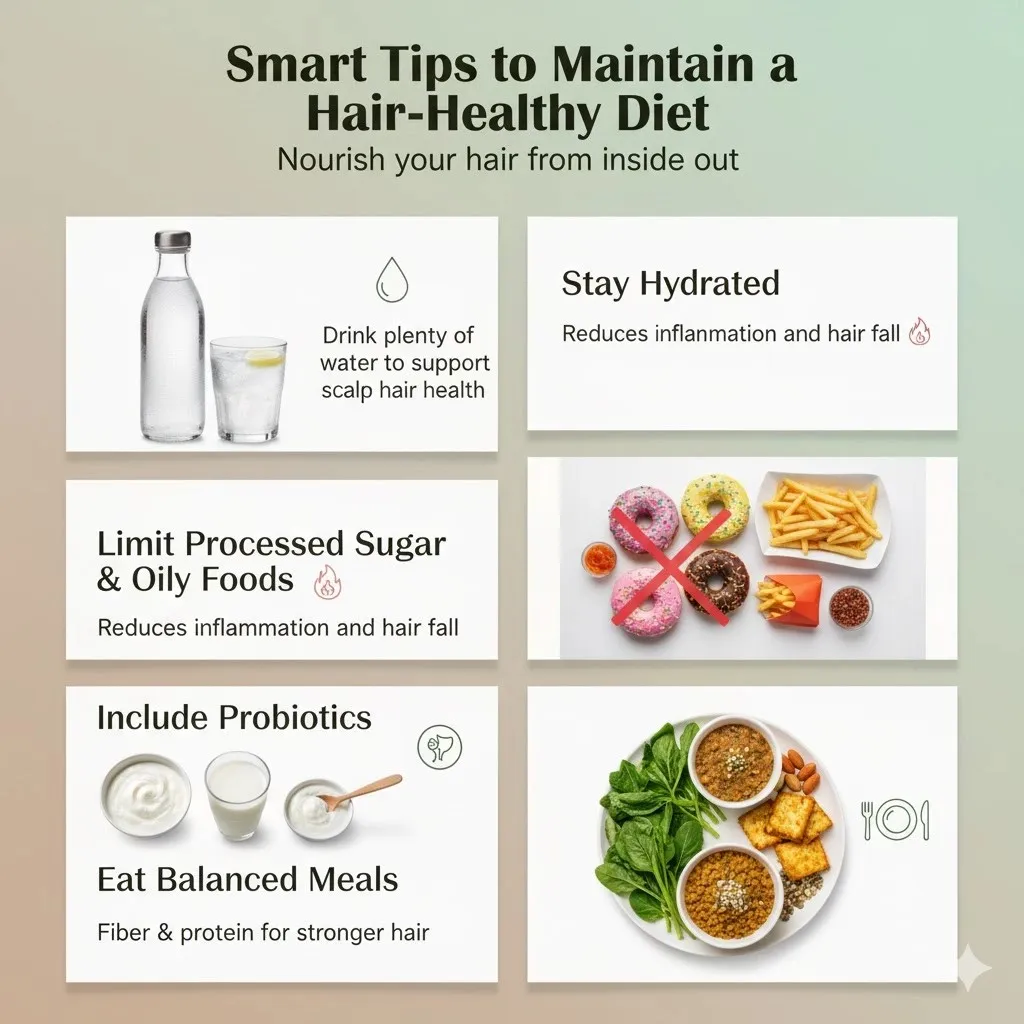
Smart Tips to Maintain a Hair-Healthy Diet
- Stay hydrated: Drink plenty of water to support scalp and hair health.
- Limit processed sugar and oily foods: Reduces inflammation and hair fall.
- Include probiotics: Foods like curd and buttermilk improve gut health and nutrient absorption.
- Eat balanced meals: Focus on fiber-rich foods and lean protein for stronger hair.
When to See a Dermatologist or Nutritionist
If hair fall continues despite following a nutrient-rich diet chart for hair growth, it may indicate underlying health issues.
Consulting a dermatologist or nutritionist is important to identify specific causes such as thyroid imbalances, PCOS, hormonal changes, or nutrient deficiencies.
A professional can provide personalized dietary guidance and treatment plans tailored to your condition, ensuring that your hair receives the right nutrients and care for optimal growth and strength.
Consistency is Key: Nourish Your Hair Daily
Maintaining healthy, strong hair starts with a consistent, nutrient-rich diet. Key nutrients like protein, vitamins (A, B7, C, D, E), minerals, omega-3s, and zinc are essential for hair growth, reducing hair fall, and improving overall hair quality.
Following a balanced daily diet chart for hair growth – including whole grains, fresh fruits and vegetables, protein-rich foods, dry fruits, nuts, and hydrating juices – ensures your hair receives the nourishment it needs.
Remember, consistency is key: with the right diet and lifestyle, your hair can grow thicker, shinier, and healthier naturally.
FAQs
A balanced diet rich in protein, vitamins (A, B7, C, D, E), minerals like zinc and iron, and healthy fats is best for hair regrowth. Whole grains, fruits, vegetables, nuts, seeds, and lean protein sources nourish hair follicles for stronger growth.
Foods like eggs, spinach, salmon, nuts, seeds, and berries are high in protein, vitamins, and antioxidants that support faster hair growth by strengthening follicles and improving scalp health.
To reduce hair fall, include protein-rich foods, iron-rich vegetables, zinc sources, and biotin-rich nuts in your diet. Avoid excessive processed sugar and oily foods, as they can weaken hair follicles.
Yes, milk is rich in protein, calcium, and vitamin D, which support keratin production and follicle health, contributing to stronger, thicker hair.
Yes, poor nutrition lacking protein, iron, vitamins, and essential minerals can lead to hair thinning, breakage, and excessive shedding. A nutrient-deficient diet is a common cause of hair fall.
Amla, berries, oranges, and bananas are excellent for hair growth. They provide vitamin C, antioxidants, and other nutrients that strengthen roots, improve circulation, and boost collagen production.
Biotin (Vitamin B7), Vitamin D, Vitamin E, and Vitamin C are known to reduce hair fall. They nourish follicles, improve scalp health, and strengthen strands from the root.
Yes, eggs are rich in protein, biotin, and other essential nutrients that strengthen hair follicles and promote healthy growth, helping to reduce hair fall over time.
Our clinics are located in following cities only, to visit our nearest clinic, contact us |
|
| Pune | Baner |
| Karve Road | |
| Koregaon Park | |
| Hyderabad | Kukatpally |
| Banjara Hills | |
| Jaipur | Bapu Nagar |
| Goa | Porvorim |
| Mumbai | Andheri West |