
Understanding Hair Thinning and How to Stop It Early
Hair thinning does not happen overnight. One day your hair feels normal, and over time it starts looking flat, weak, or less full. You may notice more hair on your comb or a wider part in the mirror. These small changes are often the first signs of hair thinning.
Losing some hair every day is normal. But when new hair does not grow back at the same speed, thinning begins. This can happen due to stress, poor nutrition, hormonal changes, or genetics. Many people ignore the early signs, thinking the problem will fix itself.
The truth is simple. Hair thinning is easier to control when you act early. With the right care, prevention steps, and treatments, it is possible to slow down hair thinning and learn how to get thicker hair.
In this guide, you will learn how to stop hair thinning by understanding its causes, prevention methods, natural care options, and medical treatments. Knowing what your hair needs is the first step toward healthier, thicker-looking hair.

How to Stop Hair Thinning Based on the Root Cause
Hair thinning does not have just one cause. Different people face this problem for different reasons. That is why one solution does not work for everyone.
Matching Causes with the Right Solution
When you know the real reason behind your hair thinning, you can explore the best hair loss treatments tailored to your specific condition. If stress is causing hair fall, you need to manage stress. If you lack vitamins, improve your diet. If hormones are the issue, seek medical help.
Prevention vs Treatment-Based Approaches
Prevention means taking steps before the problem gets bad. This includes eating well and caring for your scalp. Treatment means using medical help after hair thinning has started.
Why One Solution Does Not Fit All Hair Thinning Cases
Your body type and lifestyle are different from others. What works for your friend may not work for you. The right approach depends on your specific situation.

Causes of Hair Thinning
Knowing why hair thinning happens is the first step to stopping it.
Common Reasons Behind Hair Thinning
Hair thinning can happen for many reasons. Your genes play a big role. If your parents had thin hair, you might face the same issue. Age is another factor. Poor hair care habits like using too much heat or pulling hair tight can also weaken your hair.
Lifestyle, Hormonal, Nutritional, and Genetic Factors
Lifestyle Factors: Not getting enough sleep, high stress levels, smoking and pollution exposure.
Hormonal Changes: Hormones control hair growth. Conditions like PCOS hair loss, pregnancy changes, thyroid problems, or DHT hormone in men can make hair thin.
Nutritional Gaps: Your hair needs iron, protein, vitamins, and zinc to grow strong. Understanding which vitamin deficiency causes hair loss helps you address nutritional gaps effectively.
Genetic Reasons: If hair loss runs in your family, you have a higher chance of facing it too.
Why Identifying the Cause Is the First Step
You cannot fix a problem without knowing its cause. Finding out why your hair is thinning helps you choose the right treatment. Talk to a doctor or hair expert to understand your specific cause.
Natural Remedies for Hair Thinning
Many people prefer natural ways to care for their hair using herbs, oils, and simple ingredients.
Popular Natural Remedies for Hair Thinning
- Coconut Oil: Warm coconut oil feeds your scalp and makes hair roots stronger. Massage gently for 15 minutes, leave for 30 minutes, then wash.
- Aloe Vera: Fresh aloe vera soothes your scalp. Apply the gel, leave for 20 minutes, then rinse.
- Onion Juice: Onion juice has sulfur that strengthens hair. Apply to the scalp for 10 to 15 minutes before washing.
- Indian Gooseberry: Rich in vitamin C, it makes hair roots strong. Drink amla juice or apply amla powder mixed with water.
- Fenugreek Seeds: Soak overnight, make a paste, apply on the scalp, and wash after 30 minutes.
Natural remedies are not instant solutions. Results take time and consistency. If hair thinning continues or worsens, consult a dermatologist instead of relying only on home remedies.
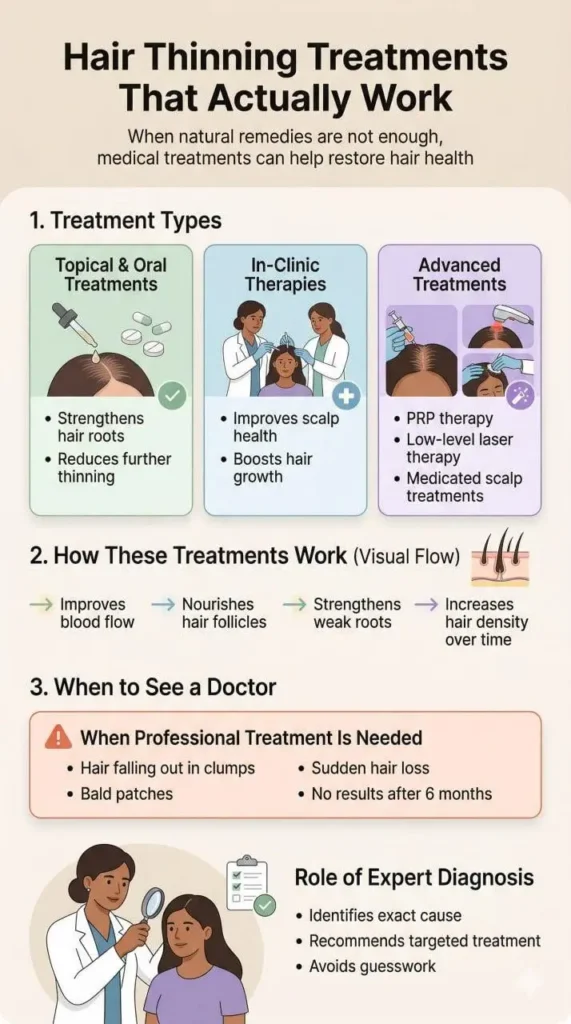
Hair Thinning Treatments That Actually Work
When natural remedies do not give enough results, medical treatments can help.
Medical and Dermatological Hair Thinning Treatments
Medical treatments for hair thinning are chosen based on the cause and severity of the problem. Common options include topical treatments that help strengthen hair roots, oral medicines that reduce further thinning, and in-clinic therapies that improve scalp health and hair growth.
Advanced treatments such as PRP hair treatment, low-level laser therapy, and medicated scalp treatments are often used when thinning is moderate to severe. These treatments work by improving blood flow to the scalp and supporting weak hair follicles. When started early and guided by a dermatologist, they can slow hair thinning and improve hair density over time.
When Professional Treatments Are Needed
See a doctor if you notice: hair falling out in clumps, bald patches on your scalp, sudden hair loss, or no improvement after six months of home care.
Role of Expert Diagnosis
A hair specialist can examine your scalp and run tests. They tell you exactly what type of hair thinning you have and recommend the best treatment. Get proper advice instead of guessing.
Hair Thinning Prevention: What You Can Do Early
Stopping hair thinning before it gets bad is easier than fixing it later.
Daily Habits That Help Prevent Hair Thinning
- Follow a proper diet for hair growth with protein, iron, vitamins, and healthy fats
- Stay hydrated by drinking enough water
- Manage stress through yoga or meditation
- Get 7 to 8 hours of sleep
- Exercise regularly to improve blood flow
Hair Care Practices That Support Scalp and Hair Health
- Gentle Washing: Wash hair two to three times weekly with a mild cleanser. Use lukewarm water, not hot.
- Avoid Tight Hairstyles: Pulling hair tight damages roots. Let your hair stay loose when possible.
- Limit Heat Styling: Use hair dryers and straighteners less often. Apply heat protection when you do.
- Use a Wide-Tooth Comb: Brush gently, starting from the ends.
- Protect from Sun and Pollution: Cover your hair in strong sun or dusty areas.
Importance of Early Prevention
Taking care of your hair before problems start gives the best results. Once hair roots are badly damaged, recovery is hard. Prevention is always better than treatment.
Your Next Step to Stop Hair Thinning
Hair thinning can be managed when you take the right steps:
- Find out what is causing your hair thinning
- Choose treatments that match your specific cause
- Try natural remedies for mild thinning
- See a doctor for medical treatments if needed
- Follow good daily hair care habits
- Eat well, manage stress, and stay healthy
The sooner you start taking care of your hair, the better your results will be. Stick with your chosen treatment plan. Most treatments need at least three to six months to show clear results. Do not rush into treatments without understanding them. Learn about your options. Ask questions to your doctor or hair specialist. Make choices based on facts.
Remember, everyone’s hair is different. What worked for someone else may not work the same for you. Be patient with yourself and your hair. With the right care and treatment, you can stop hair thinning and enjoy healthier, fuller hair again.
FAQs
Hair fall refers to hair shedding from the scalp, which can be temporary. To understand hair thinning vs balding better, note that thinning happens when new hair does not grow back at the same rate, making hair look less dense over time.
If you notice more hair shedding but your volume stays the same, it is likely hair fall. If your ponytail feels smaller, part line looks wider, or scalp becomes more visible, it is hair thinning.
Yes. Hair can thin when hair strands grow back finer and weaker, even if you do not see much hair fall. This often happens due to genetics or hormonal changes.
To stop hair thinning, identify the cause early and follow the right treatment plan. Consistent hair care, a healthy scalp, and professional guidance give the best results.
Washing 2 to 3 times a week is usually enough for thinning hair. Use a mild shampoo to keep the scalp clean without drying or weakening the hair.
Our clinics are located in following cities only, to visit our nearest clinic, contact us |
|
| Pune | Baner |
| Karve Road | |
| Koregaon Park | |
| Hyderabad | Kukatpally |
| Banjara Hills | |
| Jaipur | Bapu Nagar |
| Goa | Porvorim |
| Mumbai | Andheri West |