
Retinol vs Vitamin C: What Your Skin Actually Needs
Two ingredients. Both are popular. Both recommended by dermatologists. But which one does your skin actually need?
Skincare can feel confusing. There are so many products, so many ingredients, and so much advice out there. But if there are two ingredients that skin experts agree on, it is retinol and vitamin C. Both have strong research behind them. Both are proven to work.
According to skin specialists, retinol for skin is the most studied anti-aging ingredient available without a prescription. It is known for reducing fine lines, clearing acne, and improving skin texture.
Vitamin C is one of the top recommended antioxidants for daily skin protection and brightening. It helps fade dark spots, even out skin tone, and protect the skin from damage caused by sun and pollution.
Together, they cover a wide range of skin concerns. But that does not mean you always need both. The right choice depends on your skin and what you want to fix or improve.
That is exactly what this guide helps you figure out. We will walk you through how each ingredient works, what skin concerns they are best for, the key differences between the two, and how to use them safely without causing irritation. By the end, you will know which one is right for your skin and whether using both makes sense for you.
If you are facing a skin concern, contact our treatment clinic near you |
|
| Pune | Baner |
| Karve Road | |
| Koregaon Park | |
| Hyderabad | Kukatpally |
| Banjara Hills | |
| Jaipur | Bapu Nagar |
| Goa | Porvorim |
| Mumbai | Andheri West |
If you are facing a skin concern, contact our treatment clinic near you
Retinol for Specific Skin Concerns
Retinol is a form of vitamin A. When applied to the skin, your body converts it into retinoic acid, which is the active form that gets to work inside the skin.
Retinol speeds up skin cell turnover. Old, damaged cells shed faster and newer, healthier cells come to the surface. At the same time, retinol signals the skin to produce more collagen, keeping skin firm and tight.
Retinol works well for a range of common skin issues:
- Anti-aging and wrinkles: Retinol reduces the look of fine lines and wrinkles by boosting collagen and elastin production. It is widely regarded as the gold standard among anti-aging treatments available today.
- Acne and clogged pores: Retinol helps unclog pores, control oil production, and is often used as part of an acne treatment plan to reduce breakouts effectively. It is especially useful for blackheads and whiteheads.
- Uneven skin texture: By removing dead skin cells faster, retinol smooths out rough and bumpy skin over time.
- Hyperpigmentation: Through faster cell turnover, retinol helps with hyperpigmentation treatments by fading dark spots and discoloration gradually.
Vitamin C for Specific Skin Concerns
Vitamin C, also known as ascorbic acid, is a powerful antioxidant. Your skin naturally contains it, but sun exposure, pollution, and stress deplete it over time. Applying it topically helps restore that protection.
Vitamin C works by neutralizing free radicals. These are unstable molecules caused by UV rays, pollution, and smoke. They break down collagen and speed up visible aging. Vitamin C also blocks the production of melanin, the pigment responsible for dark spots.
Vitamin C addresses several skin concerns effectively:
- Dark spots and hyperpigmentation: Vitamin C inhibits melanin production, which helps fade dark spots on face, acne marks, and uneven tone. It is one of the most effective ingredients for brightening the skin.
- Dullness and uneven skin tone: Regular use of vitamin C gives the skin a more radiant and even appearance.
- UV and environmental protection: Vitamin C acts as an extra layer of defense against daily environmental damage. It does not replace sunscreen but works well alongside it.
- Collagen support: Vitamin C plays a direct role in the body’s collagen synthesis process, helping maintain skin firmness and elasticity.
Retinol vs Vitamin C: Head-to-Head Comparison
| Skin Concern | Retinol | Vitamin C |
|---|---|---|
| Anti-aging / Wrinkles | Stronger effect | Moderate effect |
| Brightening / Dark Spots | Moderate effect | Stronger effect |
| Acne | Yes, effective | Limited benefit |
| Sun / Environmental Protection | No | Yes |
| Sensitive Skin | Use with caution | Gentler option |
Key Differences Between Retinol and Vitamin C
Both ingredients are highly effective, but they work in different ways and suit different needs.
1. How They Work
Retinol repairs the skin from within. It rebuilds collagen, speeds up cell renewal, and corrects existing damage. Vitamin C protects the skin from the outside. It shields against environmental damage and brightens existing discoloration.
2. When to Use Them
Dermatologists recommend using vitamin C in the morning. Its antioxidant properties offer protection throughout the day, especially when paired with sunscreen.
Retinol is best used at night. It can make the skin more sensitive to sunlight, so nighttime application reduces that risk and allows the skin to repair while you sleep.
3. Skin Tolerance
Retinol is a stronger active ingredient. It can cause dryness, peeling, and redness, especially when you first start using it. Vitamin C is generally gentler and is suitable for most skin types, including sensitive skin.
4. Pregnancy Safety
Vitamin C is safe to use during pregnancy and while breastfeeding. Retinol is not recommended during these stages, as high doses of vitamin A derivatives can be harmful.

Which One Should You Choose?
Your choice should be based on your skin goals.
Choose retinol if:
- You want to reduce fine lines and wrinkles
- You struggle with acne, oily skin, or clogged pores
- Your main concern is rough or uneven skin texture
Choose vitamin C if:
- Your main concern is dark spots, sun damage, or dull skin
- You want better protection against daily pollution and UV exposure
- You have sensitive skin and need a gentler active ingredient
Use both if:
- You want to cover all fronts – brightening, anti-aging, protection, and repair
- The key is to use them at different times of day to avoid irritation
Side Effects and Precautions
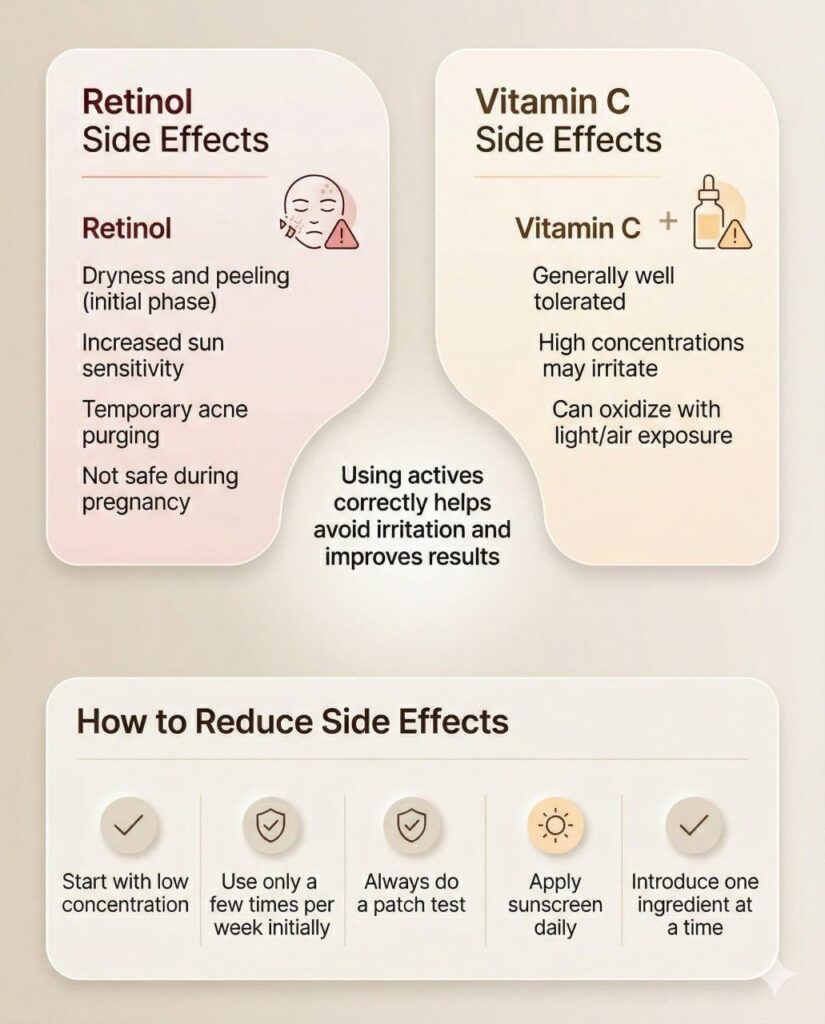
While both retinol and vitamin C are generally safe, they can cause side effects, especially when first introduced or used incorrectly. Understanding these reactions helps you use these actives safely and effectively.
Retinol Side Effects
Retinol is known to cause what’s often called the “retinization” period, where your skin adjusts to the ingredient. Common side effects include dryness, flaking, redness, peeling, and mild stinging. Sensitivity to sunlight is also heightened, which is why daily SPF is non-negotiable. To minimize irritation, start with a lower concentration (0.25% or 0.3%) and gradually increase frequency over several weeks.
Vitamin C Side Effects
Vitamin C is generally better tolerated, but some people may experience tingling, mild redness, or breakouts when first starting out, particularly with L-ascorbic acid at higher concentrations. Oxidized vitamin C (which turns yellow or orange) can also cause irritation or stain the skin temporarily. Always store your vitamin C serum in a cool, dark place and replace it if the color changes significantly.
How to Reduce Side Effects
Introduce new actives slowly — use retinol 2 to 3 nights per week initially and build up tolerance. Always pair retinol with a rich moisturizer to buffer irritation. For vitamin C, start with a lower concentration (10%) before moving to 15% or 20%. Never combine retinol with other strong exfoliants like AHAs or BHAs on the same night, and always patch test a new product on your inner arm before applying it to your face.
Can You Use Retinol and Vitamin C Together?
Yes — you absolutely can use both retinol and vitamin C in your skincare routine, and doing so can actually give you the best of both worlds: brighter, more even skin during the day and smoother, firmer skin overnight. The key is using them at the right times.
The most dermatologist-recommended approach is to apply vitamin C in the morning after cleansing and before sunscreen, and apply retinol at night after cleansing and before moisturizer. This allows each ingredient to work when it’s most effective — vitamin C shields your skin from daytime free radicals, while retinol repairs and renews overnight.
Tips for Using Both Safely
Introduce them one at a time, starting with vitamin C for 2 to 3 weeks before adding retinol. Always follow retinol with a nourishing moisturizer to reduce dryness. Never mix them in the same application unless your product is specifically formulated to combine them. Most importantly, wear broad-spectrum SPF 30+ every single day, as both actives increase sun sensitivity. If your skin becomes overly irritated, scale back use and give your barrier time to recover.
So, Which One Wins?
The truth is — there’s no real winner in the retinol vs vitamin C debate. Both are powerhouse ingredients that tackle completely different skin concerns, and both have earned their place in modern skincare for good reason. Vitamin C is your daytime protector, brightening the skin and defending against environmental damage. Retinol is your nighttime renewer, boosting collagen and smoothing fine lines while you sleep.
If you want visible, long-lasting results, the smartest move isn’t picking one over the other — it’s learning how to use them strategically, together. And if you’re unsure where to start or your skin is particularly sensitive, consulting a dermatologist at a trusted clinic like Reborn Clinics can help you build a routine that’s personalized, safe, and effective. With the right guidance, both retinol and vitamin C can transform your skin — no matter your age, skin type, or concern.
Frequently Asked Questions
Yes. The safest and most effective approach is to use vitamin C in the morning and retinol at night. This avoids potential irritation and lets each ingredient work when it's most effective.
Start with vitamin C. It's gentler, brightens dull skin quickly, and helps protect against sun damage. Once your skin is comfortable, you can introduce retinol slowly.
Retinol can be used on sensitive skin, but it requires a careful approach. Begin with a low concentration (0.25%), apply only 2 to 3 nights a week, and always buffer it with moisturizer to reduce irritation.
Yes — vitamin C is one of the most effective ingredients for fading dark spots, melasma, and post-acne marks. With consistent use, you can see a brighter, more even complexion within 6 to 12 weeks.
Vitamin C is considered safe during pregnancy. However, retinol and all retinoids should be avoided during pregnancy and breastfeeding. Always consult your doctor before using any active skincare ingredient while pregnant.
Vitamin C shows brightening results in 4 to 6 weeks. Retinol takes longer — noticeable improvements in texture, lines, and pigmentation usually appear after 8 to 12 weeks of consistent use.
For OTC strengths, you don't need a prescription. But if you have acne, melasma, or sensitive skin, consulting a dermatologist at a clinic like Reborn Clinics ensures you get the right product, concentration, and routine tailored to your skin.