
What Makes Hair Frizzy and Hard to Manage?
Does your hair look fluffy, dry, or unmanageable no matter how carefully you style it? You may spend time oiling, conditioning, or using serums, yet the frizz seems to return within hours – especially when you step outdoors.
If this sounds familiar, you’re certainly not alone. Frizzy hair is one of the most common hair concerns faced by people of all hair types, from straight to curly.
Choose Our Skin and Hair Clinic Near You |
|
| Pune |
Baner
📞 +91 99707 02000 💬 WhatsApp |
|
Karve Road
📞 +91 91122 62000 💬 WhatsApp |
|
|
Koregaon Park
📞 +91 96076 42111 💬 WhatsApp |
|
| Hyderabad |
Kukatpally
📞 +91 95459 32000 💬 WhatsApp |
|
Banjara Hills
📞 +91 95810 62000 💬 WhatsApp |
|
| Jaipur |
Bapu Nagar
📞 +91 92092 79700 💬 WhatsApp |
| Goa |
Porvorim
📞 +91 97632 42000 💬 WhatsApp |
| Mumbai |
Andheri West
📞 +91 90674 92000
💬 WhatsApp
|
In India, the problem is even more widespread due to high humidity, pollution, and frequent heat exposure. Studies and hair care experts suggest that over 60% of people in India struggle with frizzy hair, particularly during monsoon and summer months.
Frizz occurs when the outer protective layer of the hair, known as the cuticle, becomes raised or damaged. This allows moisture from the air to penetrate the hair shaft, causing it to swell, look rough, and lose its smooth appearance.
While frizzy hair is often blamed on weather alone, the truth is that daily hair care habits, product choices, and underlying hair health play a major role. Understanding why frizz happens is the first step toward controlling it effectively.
In this complete guide, you’ll discover how to control frizzy hair by addressing its root causes, choosing the right treatments and products, and following simple care practices that actually work. Whether your frizz is occasional or constant, this blog will help you achieve smoother, healthier, and more manageable hair in the long run.

What Causes Frizzy Hair?
1. Lack of Moisture in Hair
Dry hair is the main reason for frizz. When your hair lacks natural oils, it absorbs moisture from the air, making it swell and look puffy. Washing too often or using wrong products can remove natural oils.
2. Humidity and Weather Conditions
High humidity makes moisture enter your hair strands, causing them to swell. The monsoon season is especially hard for people with frizz. Winter also causes frizz because cold air removes moisture.
3. Heat Styling and Chemical Treatments
Hair dryers, straighteners, and curling irons use high heat that damages your hair. Chemical treatments like coloring also harm your hair structure, making it weak and prone to frizz.
4. Wrong Hair Care Routine and Harsh Products
Products with sulfates strip natural oils from your hair. Hot water during washing removes essential moisture. Rubbing hair with a rough towel creates friction. Brushing dry hair roughly can break strands and increase frizz.
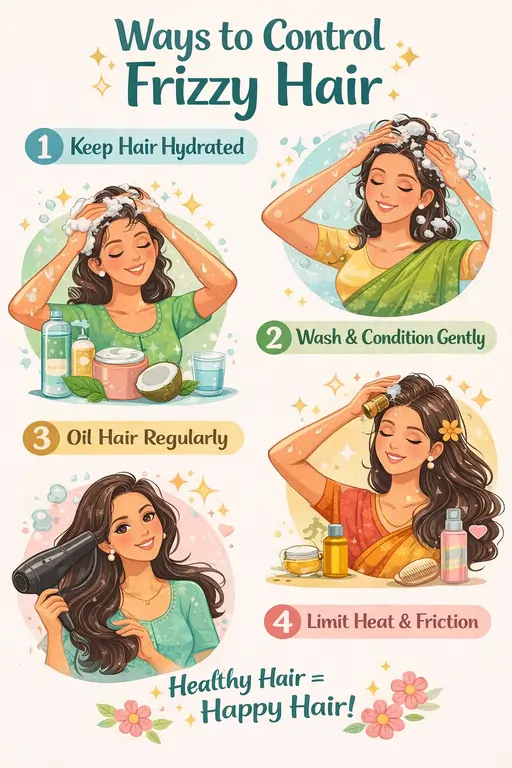
Ways to Control Frizzy Hair
1. Importance of Proper Hair Hydration
Keeping your hair hydrated is key to fighting frizz. Deep conditioning treatments put moisture back into dry strands. Use a hair mask once a week.
2. Gentle Washing and Conditioning Habits
Wash your hair only 2 to 3 times per week. Use cool water for the final rinse to close the hair cuticle and lock in moisture.
Always use conditioner after shampooing. Apply from mid-length to the ends. Use a leave-in conditioner on damp hair for extra protection.
3. Role of Regular Oiling and Deep Conditioning
Apply oil to your scalp and hair once a week. Massage gently and leave on for 30 minutes or overnight before washing.
Use deep conditioning masks weekly on damp hair. Cover with a warm towel for better results.
4. Avoiding Excessive Heat and Friction
Limit heat styling tools. When using them, apply heat protection first. Set tools to the lowest heat setting.
After washing, use a soft cotton t-shirt or microfiber towel. Gently press and squeeze the water out.
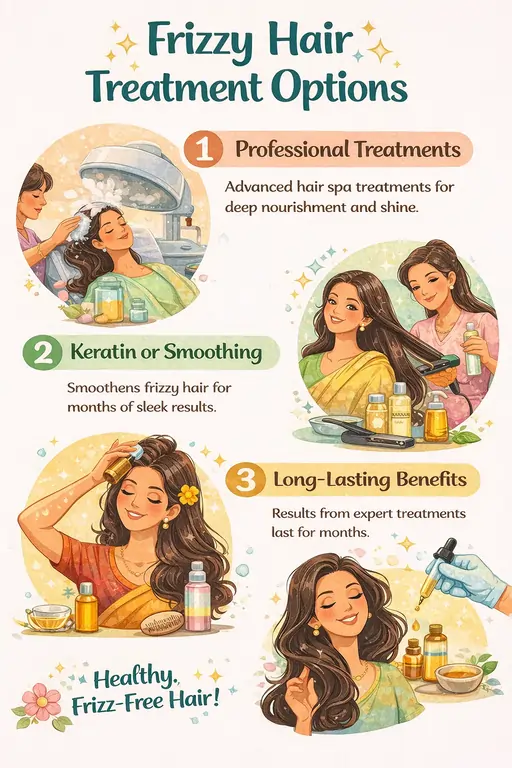
Frizzy Hair Treatment Options
1. Professional Treatments for Frizz Control
Professional hair care treatment at clinics can give long-lasting results. Hair specialists use advanced formulations and clinical techniques that work at a deeper level. Professional hair spa treatments help restore moisture and shine through medical-grade conditioning, controlled steam therapy, and expert scalp massage.
2. Keratin and Smoothening Treatments
Keratin treatments add protein to your hair and seal the cuticle. The result is smooth, straight hair that lasts for several months. Modern versions use better ingredients that cause less damage.
Smoothening treatments coat your hair with protective products. Other advanced options include botox hair treatment which deeply nourishes and smoothes frizzy hair. These treatments need proper care afterward. Use sulfate-free products and avoid washing hair for a few days.
3. Long-Term Benefits of Expert-Guided Treatments
Professional treatments give results that last 3 to 6 months. They save time on daily styling and make hair healthier. Trained experts suggest options like PRP hair treatment or keratin therapy based on your hair type and frizz severity.

Best Frizzy Hair Products to Control Frizz
1. Shampoos and Conditioners for Frizzy Hair
Choose shampoos free from sulfates and parabens. These gentle formulas clean hair without removing natural oils from strands.
Conditioners for frizzy hair should be rich with ingredients that seal moisture. Apply conditioner every time you wash your hair.
2. Serums, Masks, and Leave-In Conditioners
Hair serums create a protective layer that blocks moisture from the air. Use 2 to 3 drops on damp or dry hair, focusing on mid-lengths and ends.
Hair masks provide deep treatment once or twice a week with concentrated ingredients. Leave-in conditioners are perfect for daily use to keep hair hydrated.
3. Importance of Choosing Sulfate-Free and Moisturizing Products
Sulfates are harsh chemicals that strip natural oils from your hair, leading to dryness. Always choose sulfate-free options.
Moisturizing products should have natural oils and butter. These ingredients lock in water and keep hair soft, working well even in humid weather.
Daily Hair Care Tips to Control Frizzy Hair
1. Correct Way to Towel-Dry Hair
Incorporating these steps into your daily hair care routine is essential for frizz control. Never rub your hair with a towel after washing. This creates friction and damages the hair cuticle. Gently squeeze sections of your hair to remove extra water. Use a microfiber towel or soft cotton cloth. Pat your hair dry rather than rubbing it.
2. Combing Techniques to Reduce Frizz
Use a wide-tooth comb on wet hair. Start from the ends and work your way up to the roots. This prevents breakage. Never brush wet hair with a regular brush.
For dry hair, use a brush with natural bristles. These brushes distribute natural oils along your hair. Comb only when needed as too much combing creates static.
3. Protecting Hair While Sleeping and Outdoors
Cotton pillowcases absorb moisture and create friction. Switch to silk or satin pillowcases to keep hair smooth overnight. You can also tie your hair in a loose braid before sleeping.
When going outdoors, cover your hair with a scarf or hat. This protects it from sun, wind, and pollution that can dry out your hair.
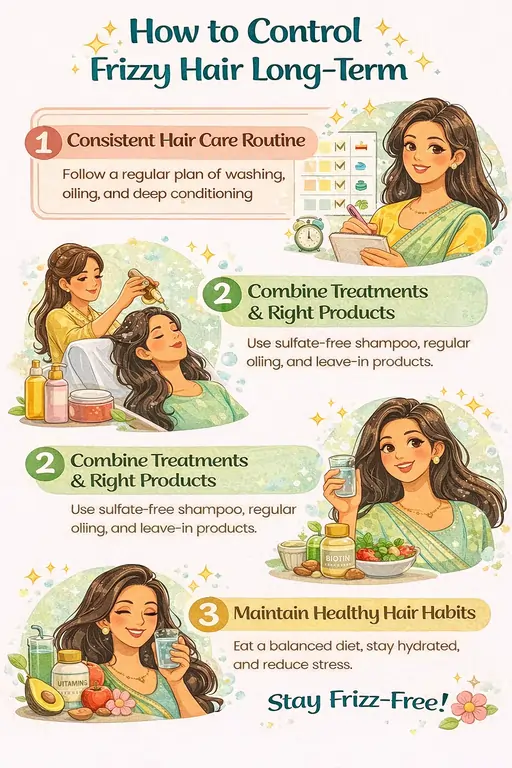
How to Control Frizzy Hair Long-Term
1. Building a Consistent Hair Care Routine
Success in controlling frizz comes from being regular. Create a weekly plan that includes washing, oiling, and deep conditioning. Stick to this routine even when your hair looks good.
Keep track of what works for your hair. Whether you’re dealing with frizz or hair fall control, every person’s hair is different and requires personalized care. Pay attention to how your hair responds and adjust your routine accordingly.
2. Combining Treatments and Right Products
Using the right combination gives the best results. Combine regular oiling with sulfate-free shampoo. Add weekly deep conditioning and daily leave-in products.
Professional treatments can be part of your routine. Get a salon treatment every few months and maintain your hair with proper home care between visits.
3. Maintaining Hair Health for Lasting Frizz Control
Healthy hair is less likely to become frizzy. Eat a balanced diet with enough protein, biotin for hair growth, vitamins for hair health, and healthy fats. Drink plenty of water to keep your body and hair hydrated.
Avoid stress and get enough sleep. Regular exercise improves blood circulation to your scalp, helping your hair grow stronger and more resistant to frizz.
How to Control Frizzy Hair the Right Way
Controlling frizzy hair requires understanding your hair, choosing the right products, and following a good routine. Keep your hair hydrated with regular conditioning and oiling. Protect it from heat and harsh weather.
Invest in quality sulfate-free products that suit your hair type. Consider professional treatments for long-lasting results. Most importantly, be patient and consistent.
Everyone’s hair is unique. What works for others might need adjustment for you. Pay attention to how your hair responds and make changes as needed. With the right approach and regular care, you can enjoy smooth, healthy, frizz-free hair every day.
FAQs
To stop frizzy hair, focus on keeping it well-hydrated using a moisturizing shampoo and conditioner. Avoid excessive heat styling and protect your hair from humidity with suitable serums or leave-in products.
You can reduce frizzy hair naturally by regular oiling, deep conditioning, and using natural masks like coconut oil or aloe vera. Air-drying hair and avoiding harsh chemicals also help control frizz.
Frizzy hair is mainly caused by dryness, humidity, heat styling, chemical treatments, and damage to the hair cuticle. When the cuticle lifts, moisture enters the hair shaft and causes frizz.
Understanding which vitamin deficiency causes hair loss and frizz is important - biotin, vitamin E, and essential fatty acids play key roles in hair texture. Lack of proper hydration and protein can also affect hair texture.
Silky hair in 7 days is possible with intensive care like deep conditioning, oil massages, and avoiding heat styling. Using smoothing hair masks and gentle washing can quickly improve hair softness.
Hormonal imbalances, especially related to thyroid hormones and estrogen levels, can affect hair moisture and texture, leading to frizz. Stress hormones may also worsen hair dryness.
Yes, coconut oil is good for frizzy hair as it deeply nourishes the hair and reduces moisture loss. Regular use helps smooth the hair cuticle and improve manageability.