Have you always wanted dimples, and noticed how much warmth they add to a smile? Do you have one on a single cheek and wish the other side matched? Dimples are a small genetic quirk of facial anatomy that a lot of people find appealing, and they are one of the few features that can be created surgically through a short, straightforward procedure with no visible scar at all. At Reborn Skin and Hair Clinic, Bangalore, we perform dimple creation for men and women across the city. Patients come to us from Indiranagar, Koramangala, Whitefield, HSR Layout, Jayanagar, JP Nagar, Marathahalli, Malleshwaram, Electronic City, Bannerghatta Road, Hebbal, and Yelahanka. This is a small procedure with a quick recovery, and there are three things about it that every patient should be told beforehand: it looks very different in the first few weeks than it will at three months, it does not always hold, and it is considerably harder to undo than to create.
We have treated several patients coming for this treatment from nearby localities like Aundh, Pashan, Hinjewadi, Ravet, Balewadi, Wakad, Pimple Saudagar, Pimple Nilakh, PCMC, Park Street, Sus and Mahalunge in Pune.
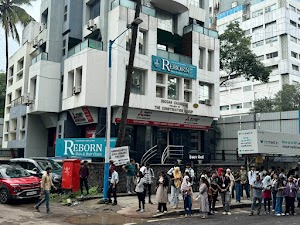
2ND FLOOR, TULIP TOWER, above TOYNATION, Madhavbaug Society, Balewadi Phata, Baner, Pune, Maharashtra 411069
We have provided treatment to a number of patients who came from Pune station and surrounding areas, including Wagholi, Kharadi, Wadgaon Sheri, Viman Nagar, Camp, Amanora Park, Magarpatta, Kalyani Nagar, Hadapsar, NIBM Road, Fatima Nagar, Salunkhe Vihar, Wanwadi and Mundhwa, in Pune.
1ST FLOOR, Gera legend, UNIT NO 107, N Main Rd, above KRISHNA MEDICARE, Ragvilas Society, Koregaon Park, Pune, Maharashtra 411001
We have treated various patients who came for this treatment from adjacent areas, such as Swargate, Deccan Gymkhana, Karve Nagar, Kothrud, Model Colony, Prabhat Road, Bhandarkar Road, Nanded City, Warje, and Katraj in Pune.
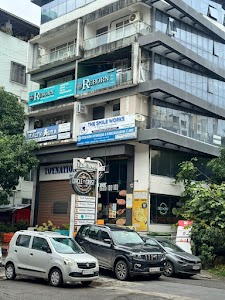
CTS No 33, Deccan Chamber, A2 2nd Floor, Nr Sahaydri Hospital, 20, Karve Rd, nr. Garware Metro station, above Mitsubishi cooling Planet, Deccan Gymkhana, Pune, Maharashtra 411004


Treatment |
Cost per session |
|---|---|
| Dimple Creation Dimpleplasty in Bangalore (starting) | Starts at ₹20,000 |
Prices mentioned are indicative and may vary based on individual condition and treatment plan. Final pricing confirmed after consultation. EMI available.
What Affects the Cost?
The figure above is the procedure fee for a single cheek dimple. A matched pair is quoted separately, and the consultation fee is normally adjusted against the procedure if you go ahead. You will be given a written total at your consultation.
Easy EMI Options Available – Zero-interest EMI plans available on select packages.
No Hidden Charges, Ever – All prices include consultation, sessions, and post-care guidance.
When considering the dimpleplasty cost near me, we offer transparent, customized pricing with no hidden charges.
Understanding this explains exactly what the surgery is doing and why it behaves the way it does afterwards.
A natural dimple is a small anatomical variation in one of the muscles that lifts the corner of the mouth. In most people that muscle runs cleanly beneath the cheek. In people with dimples, part of the muscle is split, or a short fibre attaches directly to the undersurface of the skin. When they smile and the muscle contracts, it pulls that point of skin inward, and a dimple appears.
Three things follow from this. A natural dimple appears when you smile and softens at rest, because it depends on muscle movement. It sits where that muscle fibre happens to attach, which is why natural dimples are often slightly asymmetrical. And it is a tethering point, not a hollow, which is why the surgery works by creating an attachment rather than by removing tissue.
Dimples are common, genetic, and entirely normal. Having one on a single side is very common, and one of the most frequent reasons people come to us is wanting the second side to match rather than wanting two new ones.
Where the incision goes. Entirely inside the mouth, on the inner cheek lining. There is no external incision anywhere on the face, so there is no visible scar at any stage. This is one of the genuine advantages of the procedure.
What is done. After marking the position precisely with you sitting upright and smiling, local anaesthetic is given. A small incision is made on the inner cheek at the marked point. A small amount of tissue is removed to allow the skin to sit inward, and an absorbable suture is passed through the undersurface of the skin and anchored to the muscle layer. As that suture dissolves over the following weeks, scar tissue forms along its path and creates a lasting adhesion between skin and muscle. That adhesion is what produces the dimple when you smile.
Anaesthesia. Local anaesthetic only. You are awake and comfortable throughout.
Duration. Around 20 to 30 minutes for one dimple, 30 to 45 minutes for a pair.
Recovery in brief. Swelling for three to seven days, a soft diet and antiseptic mouthwash for a few days, and most people back at work within two to three days.
The other honest thing to know before you book.
Not every dimple holds In a proportion of patients the adhesion between skin and muscle does not mature strongly enough, and the dimple gradually flattens over the months after surgery until it is barely visible or gone. This is not a sign that anything was done incorrectly. It reflects how individual tissue heals.
What makes fading more likely Thicker cheeks with a greater amount of fat between skin and muscle, very deep placement attempts, and smoking, which affects how scar tissue forms.
What we do about it. Where a dimple has faded significantly, a revision procedure can be performed once the tissue has fully settled, generally after six months. We will discuss the likelihood of needing this in your particular case before you decide, rather than afterwards.
What we will not do. Promise you a result that lasts for life. Nobody can honestly do that with this procedure, and any clinic that does is telling you what you want to hear.
This is the single most common reason patients contact us in the first fortnight, and it is entirely normal.
In the first few weeks your dimple will be visible all the time, including when your face is completely at rest. It will look deeper and more defined than the result you were shown. Many people find this unsettling and think something has gone wrong.
Nothing has. The area is swollen, the suture is still in place, and the tissue has not yet settled around the new attachment. A dimple that is invisible at rest on day three would be a dimple that is unlikely to persist at all.
What happens next. Over roughly four to eight weeks the swelling resolves, the suture dissolves, and the adhesion matures. The dimple becomes progressively softer at rest and increasingly appears mainly when you smile. By around three months you are seeing your actual result.
Do not judge your dimple before three months, and please do not ask for a revision before then. We show you photographs of this timeline at your consultation so you know exactly what to expect at each stage.
Some people change their minds, and you should know the position before you commit.
Creating a dimple takes twenty minutes and forms a deliberate adhesion. Removing one means going back in, releasing that adhesion, and preventing it from re-forming, often with a tissue barrier placed between the layers. It is more involved, less predictable, and can leave the area slightly irregular.
This is the main reason we counsel restraint on depth. A subtle dimple that appears when you smile is what most people actually want when they picture the result, and it is far easier to live with long term than a deep, constantly visible one. If you ask for something very pronounced, we will show you what that looks like and explain the trade-off before agreeing to it.
Take your time deciding. There is no urgency with this procedure, and it is entirely reasonable to think about it for a few months.
Placement matters more than technique here, because a dimple in the wrong place looks wrong in a way that is difficult to explain but immediately obvious.
How we mark it. With you sitting upright, in good light, and smiling naturally. There is a conventional reference point on the cheek, but we do not rely on it alone. We look at where your own cheek already creases when you smile, since placing the dimple along your natural crease produces a far more believable result than placing it on a textbook coordinate.
If you already have one dimple. We measure and mirror it, matching depth as well as position. Matching an existing dimple usually gives the most natural outcome of any dimple surgery, because you already have a reference.
Symmetry expectations. Natural dimples are frequently slightly uneven, and a perfectly matched pair can look artificial. Some deliberate variation is often the right call, and we will discuss it with you.
Too high, too central, or too deep are the three placement errors that make a dimple look created rather than born with. Avoiding them is the point of a careful, unhurried marking session before any anaesthetic is given.
A chin dimple, or cleft chin, is anatomically unrelated to a cheek dimple and is created differently.
A natural chin cleft comes from the way the two halves of the chin muscle and the underlying bone meet in the midline. Creating one involves working on the soft tissue and sometimes the bone in the midline of the chin, through an incision inside the lower lip, and it is a more involved procedure than a cheek dimple.
Unlike a cheek dimple, a chin cleft is present at rest rather than appearing on smiling, so it is a constant feature of the face. That makes the decision a larger one, and we assess chin projection and shape as a whole rather than treating the cleft in isolation.
No, and it is worth being direct about the products sold for this.
Suction devices and dimple makers. These are sold online as clips or suction cups worn against the cheek for periods each day, with claims that they will train a dimple to form. They do not create an attachment between skin and muscle, which is the only thing that produces a dimple. What they do produce is bruising, pressure marks, and occasionally lasting irritation of the cheek lining.
Facial exercises. They work the muscle. A dimple is not a muscle problem, it is an attachment between muscle and skin, and no amount of exercise creates one.
Makeup. Contouring can suggest a dimple convincingly in photographs, and it washes off. Nothing wrong with it as an option.
Filler. Some clinics discuss creating a dimple with injectables. Filler adds volume, so it can shape the area around a dimple but it does not create the inward tether that a dimple requires.
The only method that produces a genuine dimple is a surgical attachment between the undersurface of the skin and the muscle beneath it.
A doctor examines your face at rest and smiling, in good light and sitting upright, and identifies where your cheek naturally creases. Cheek thickness is assessed, since this affects how well a dimple will hold. Any existing dimple is measured for mirroring. Your medical history, medicines, dental and gum health, and any previous facial surgery or filler are recorded. Photographs are taken at rest and smiling. You are then shown the expected timeline, told the likelihood of fading in your case, and given a written cost.
Dental and gum health is checked, since the incision is inside the mouth, and any active infection must be treated first. An antiseptic mouthwash is usually started before the procedure. Blood thinners and supplements are reviewed. You will be asked to stop smoking, which affects both healing and how well the adhesion forms.
You sit upright while the position is marked and confirmed with you smiling, and you are shown the mark in a mirror before anything else happens. Local anaesthetic is given inside the cheek. A small incision is made on the inner cheek lining, a small amount of tissue is removed, and an absorbable suture is passed through the undersurface of the skin and anchored to the muscle. The inner cheek is closed with a dissolving stitch. You will see the effect immediately.
20 to 30 minutes for one dimple, 30 to 45 minutes for a pair.
None. It is a day procedure under local anaesthetic and you go home shortly afterwards.
Immediately, but constant and exaggerated. It softens over 4 to 8 weeks, and your actual result is what you see at around 3 months.
Critical Safety Note : Tell your doctor about every medicine and supplement, particularly blood thinners and aspirin, and about diabetes, bleeding disorders, and any immune condition, since these affect healing of a wound inside the mouth. Declare any dental implant, recent extraction, gum disease, or planned dental work. Declare any previous facial surgery, filler, or thread in the cheek area, including anything received outside a clinic. If you are pregnant, breastfeeding, or planning a pregnancy, this procedure is deferred.
Searching for a dermatologist near you in Bangalore? Our team of qualified skin doctors, dermatologists and hair specialists personalizes every treatment based on your skin type and concern. Consult our dermatologist in Bangalore and skin specialists at our nearest skin and hair clinic
MBBS, DVD
Dermatologist & Venerologist
MDS(Maxillofacial surgeon)
Aesthetic Physician
MDS, Maxillofacial &
Hair Transplant Surgeon
MBBS, DDV, FAM
Dermatologist
MBBS, DVD
Dermatologist & Venerologist
MDS(Maxillofacial surgeon)
Aesthetic Physician
MDS, Maxillofacial &
Hair Transplant Surgeon
MBBS, DDV, FAM
Dermatologist
A natural dimple is a small variation in one of the muscles that lifts the corner of the mouth, where part of the muscle is split or a short fibre attaches directly to the undersurface of the skin. When you smile and the muscle contracts, it pulls that point of skin inward. It is genetic, entirely normal, and frequently occurs on only one side.
The entire procedure is done through a small incision inside the mouth on the inner cheek lining, so there is no external scar at any stage. A small amount of tissue is removed and an absorbable suture anchors the undersurface of the skin to the muscle. It takes 20 to 30 minutes under local anaesthetic and you go home shortly afterwards.
Because that is what happens in the first few weeks and it is expected. Swelling is present, the suture is still in place, and the tissue has not settled around the new attachment. Over roughly four to eight weeks it softens at rest and increasingly appears mainly when you smile. Judge your result at three months, not before.
Many hold long term, but not all do. In a proportion of patients the adhesion does not mature strongly enough and the dimple gradually flattens over the months after surgery. Thicker cheeks and smoking make this more likely. Where a dimple has faded significantly, a revision can usually be considered from around six months.
It can be, but it is more involved and less predictable than creating one. Reversal means releasing the adhesion and preventing it from re-forming, sometimes with a tissue barrier placed between the layers, and the area can be left slightly irregular. This is the main reason we recommend a subtle dimple rather than a deep, constantly visible one.
No. Suction devices and dimple makers sold online do not create an attachment between skin and muscle, which is the only thing that produces a dimple, and they cause bruising and pressure marks instead. Facial exercises work the muscle, which is not the issue. Filler adds volume but does not create the inward tether a dimple requires.
It is done under local anaesthetic so the procedure itself is comfortable. Afterwards you take a soft, cool diet and rinse with an antiseptic mouthwash for a few days, with cold compresses for swelling. Cheek swelling lasts three to seven days and most people return to work within two to three days.
Yes, and this is one of the most satisfying versions of the procedure. Your existing dimple is measured for position and depth and mirrored on the other side. Having a natural reference on your own face generally produces a more believable result than creating two new dimples from scratch.
Yes, though it is a different and more involved procedure. A chin cleft comes from how the chin muscle and underlying bone meet in the midline, and creating one involves working on the soft tissue and sometimes the bone through an incision inside the lower lip. Unlike a cheek dimple it is present at rest rather than appearing when you smile.
Book a free consultation at Reborn Skin and Hair Clinic, Bangalore. A doctor will watch how your cheek creases when you smile, mark the position with you sitting upright and show it to you before anything is done, assess cheek thickness and how well a dimple is likely to hold, and explain the week-by-week timeline. There is no urgency, and taking a few months to decide is entirely reasonable. We see patients from across Bangalore.
Add natural-looking dimples and enhance your facial charm with personalized Dimple Creation treatment. Book your free consultation at Reborn Skin & Hair Clinic, Bangalore, with transparent pricing.
Advanced Skin, hair & Asthetic Treatments Now Closer to You!
Trusted in Pune, Mumbai, Hyderabad, Goa & Jaipur.
Coming Soon to BANGALORE.
Stay Tuned for Our Grand Launch!
EXPERT CARE AWAITS
We’re getting ready to welcome you.
Advanced Skin, hair & Asthetic Treatments Now Closer to You!
Stay Tuned for Our Grand Launch!
EXPERT CARE AWAITS
We’re getting ready to welcome you.